Flight Instructor Jobs in NYC: Part-Time CFI and CFII
Aviator.NYC is hiring part-time flight instructors (CFI/CFII) who love to teach. Set your own schedule and teach real students on our Garmin G1000 AATD in Midtown Manhattan, and on our Cirrus SR20 and SR22 simulators once they arrive. This is an on-demand teaching side gig, not a full-time job: our instructors fly professionally and teach here because they enjoy it. Garmin G1000 fluency is required.
- Pay
- $35 to $85 per hour
- Schedule
- Part-time, set your own hours
- Location
- Midtown Manhattan
- Simulators
- Garmin G1000 AATD now, Cirrus SR20/SR22 G3000 to follow
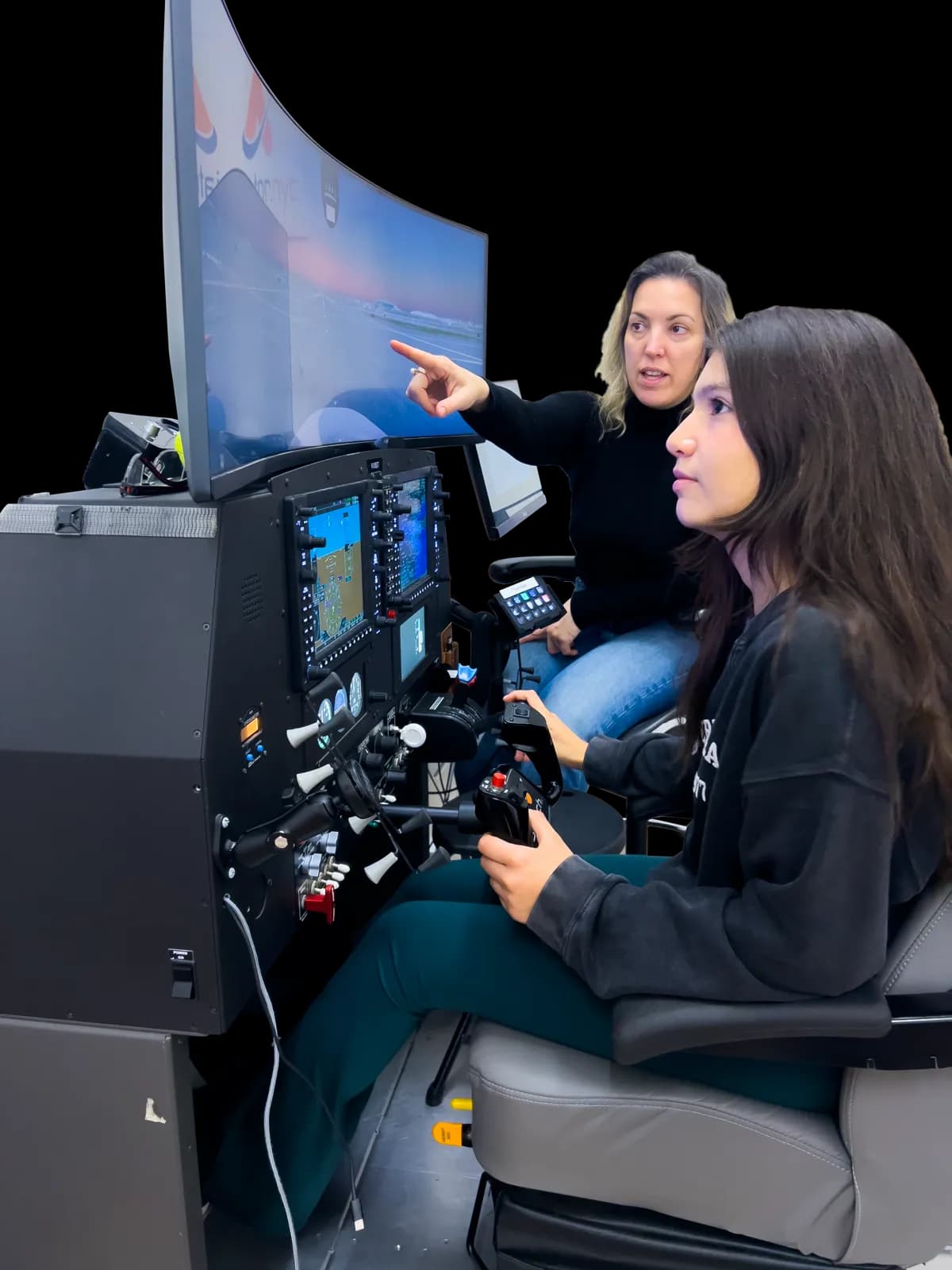
What does a flight simulator instructor do at Aviator.NYC?
As a part-time instructor at Aviator.NYC, you teach real students on our Garmin G1000 Advanced Aviation Training Device (AATD), and on our Cirrus SR20 and SR22 simulators with the Garmin G3000 flight deck once they arrive. Sessions run in a professional studio in Midtown Manhattan, not at a remote airport. You brief your student, teach the session, and debrief; our scheduling system matches students to the availability you set.
A typical week might include:
- A first simulator lesson for a complete beginner
- An instrument lesson for a private pilot
- An IFR currency session for a licensed pilot
- A proficiency session for someone who flies professionally
Everything is simulator-based: there is no aircraft to preflight, no fuel to manage, and no weather cancellations.
Who should apply for this CFI/CFII job?
This is a part-time teaching side gig for instructors who genuinely love to teach. It is not a career move and it is not an hour-building stop: time spent teaching in a simulator does not count toward the 1,500 flight hours most airline jobs require, and we like it that way. Everyone who teaches here flies professionally or is building a flying career, and they keep teaching because sharing the craft is the point. Some of our instructors move on to airline or corporate flying jobs; that is normal and we support it.
You are a strong fit if you:
- Live in or near New York City and can commute reliably to Midtown Manhattan
- Want on-demand teaching that fits around another job or a flying schedule
- Are fluent in Garmin G1000 procedures
- Enjoy teaching first-time flyers and instrument students equally
You do not need 1,500 hours or an airline background, and limited overall experience can be mentored. What you must show is fluency in G1000 procedures. Before your interview, watch these three YouTube playlists; they show the level we expect you to perform at:
Read about who teaches at Aviator.NYC to see the team you would join.
What are the requirements?
Here is what we look for. If you meet most of these and are fluent on the G1000, we want to hear from you.
| Requirement | Details |
|---|---|
| Current FAA CFI and CFII | Valid Certified Flight Instructor (CFI) and instrument instructor (CFII) certificates. Gold Seal is a plus but not required. |
| Garmin G1000 fluency (required) | The one requirement we do not flex on. You must be fluent in G1000 procedures and workflows. Limited overall experience can be mentored, but fluency has to show in your interview; watch our Live Instrument Approaches, Instrument Departures and Instrument Approach Configuration playlists beforehand; they show the level we expect you to perform at. |
| Garmin G3000 (ideal, trainable) | Ideal but not required. Instructors who are strong on the G1000 pick up the G3000 during onboarding. |
| Cirrus SR20/SR22 familiarity (a plus) | Time in the SR20 or SR22 helps, but there is no minimum. Our Cirrus simulators will replicate the airplane, and we cover the airframe specifics during onboarding. |
| Based in the NYC area | You must reliably commute to our Midtown Manhattan studio (35 West 31st Street, Suite 901, by appointment only). We cannot accommodate remote instructors. |
| Professional demeanor | Our clients include licensed pilots, professionals, and executives. You represent the brand in every session. |
How much does the job pay?
Flight instructors at Aviator.NYC earn $35 to $85 per hour, paid per session hour, not per flight hour. A two-hour lesson means two hours of pay with no unpaid preflight, taxi, or waiting time. Because all training happens on simulators in Manhattan, there are no weather cancellations, no maintenance delays, and no lost income from a grounded airplane. You teach, you get paid.
Where you land in the range depends on your experience, your certificates, your depth on the Garmin flight decks, and your availability. Rates are reviewed as you take on more students and more advanced sessions, so instructors who grow with us move up the range over time.
Why teach here instead of at an airport?
Because this job is built around teaching, not logging time. Our students book because they want to learn, show up prepared, and come back week after week. You teach in a professional studio in Midtown Manhattan instead of on a windy ramp.
What instructors like most:
- A schedule you control: open the hours you want, and students book into them
- Quality students, from first-time flyers to instrument-rated pilots
- No aircraft management: no maintenance delays, fuel planning, or weather holds
- Colleagues who fly professionally, with the mentorship and connections that come from working alongside active airline pilots
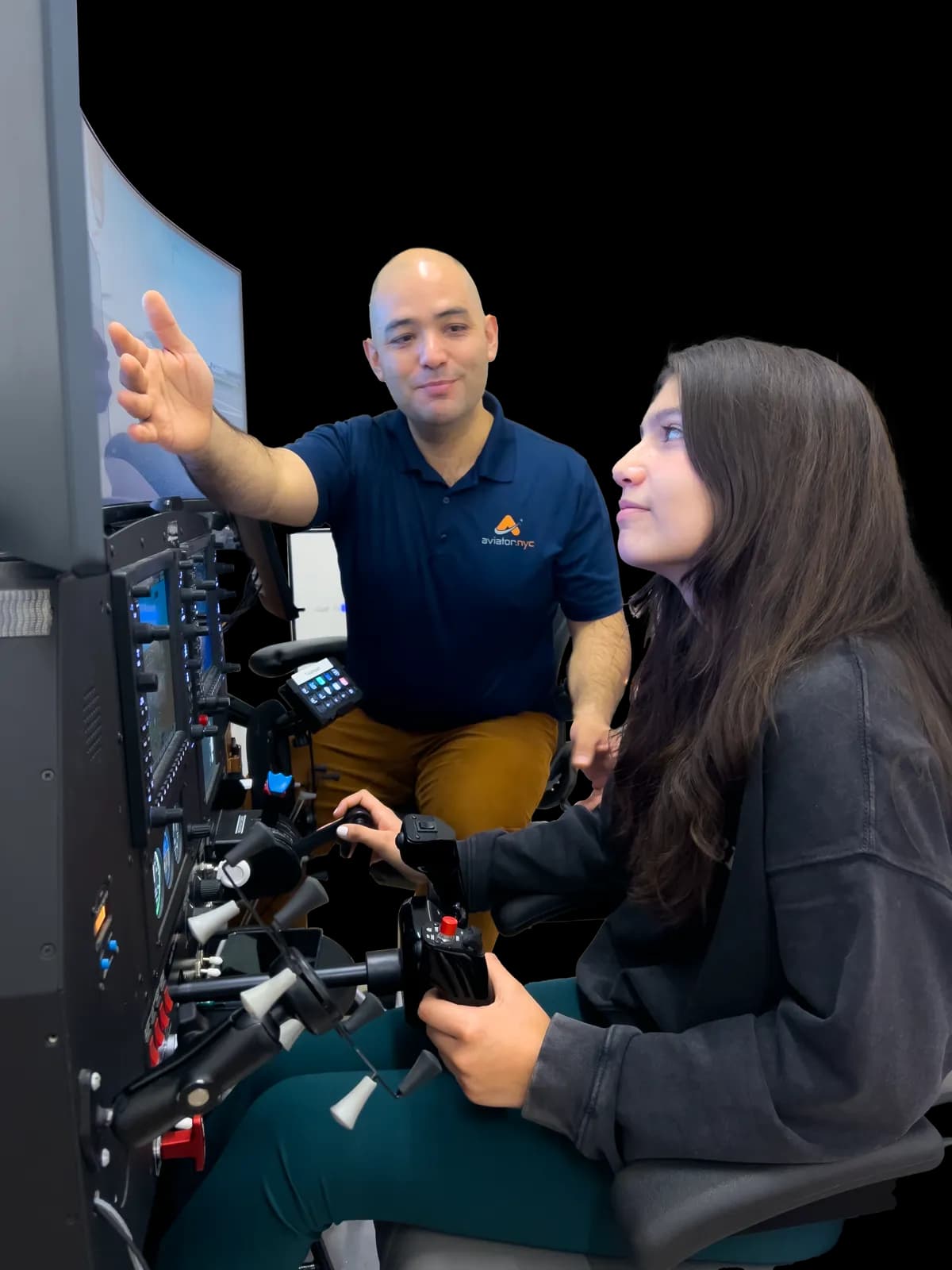
Is this a full-time job?
No. This is part-time, on-demand, independent contract work, and we are clear about that up front. You set your own availability, we match students to it, and there are no minimum hours. Most instructors teach a handful of sessions per week around other flying, studying, or work commitments.
The structure is intentional: it is designed to sit alongside an airline schedule, corporate flying, or another job. If you are looking for a full-time salaried instructor position, this is not that job. If you want flexible, well-paid teaching in Manhattan on a schedule you control, it is exactly that job.
Flight Instructor FAQ
No. There is no 1,500-hour minimum and no airline experience requirement; newer CFIs and CFIIs are welcome. Our teaching team is led by active airline pilots who mentor the instructors working here, so you learn professional standards on the job instead of needing them on day one. What we do require is fluency in Garmin G1000 procedures. If your overall experience is limited, that is fine: we mentor instructors, and before your interview we send a short set of our YouTube videos covering the G1000 procedures we expect, so you know exactly what to prepare. If you love teaching and want paid, flexible instruction work in Manhattan, you are exactly who this job is designed for.
This is part-time, independent contract work, not full-time employment. Most Aviator.NYC instructors teach 5 to 15 hours per week around their other commitments. You set your own availability through our scheduling system and we match you with students who fit your open slots. There are no minimum-hour requirements: some instructors teach one session a week, others teach five or more. Because all training happens on simulators in our Midtown Manhattan studio, sessions are never cancelled for weather or maintenance, so the hours you commit to are hours you actually teach and get paid for. You maintain complete control over when and how often you work.
Yes. G1000 fluency is the one requirement we do not flex on. You will teach on a Garmin G1000 AATD, and on G3000-equipped Cirrus simulators once they arrive, and students expect an instructor who is completely at home in the flight deck. Limited overall experience can be mentored, but you must demonstrate fluency in G1000 procedures at your interview. To make that fair, the exact procedures we expect are covered in the Garmin G1000 playlist on our YouTube channel, linked in the requirements above. Watch it and you will know what the evaluation looks like before you walk in.
Ideally, yes, but it is not a hard requirement. Our Cirrus simulators will use the G3000, and the best-fit candidate has flown both flight decks. If you are strong on the G1000, we can teach you the G3000 during onboarding: the familiarization covers the touchscreen controllers, flight management workflows, and the specific configuration of our simulators. Instructors who are already fluent on Garmin flight decks typically pick it up quickly. Be upfront in your application about which avionics you have flown and how much time you have on each.
No. Cirrus familiarity is a plus, not a requirement. Our Cirrus simulators will replicate the SR20 and SR22, and we cover the airframe specifics, from avionics configuration to safety systems, during onboarding. The requirement is avionics fluency: you must know your way around the Garmin G1000, because that is the foundation everything else builds on. If you have real SR20 or SR22 time, mention it in your application; it helps. If you do not, apply anyway and show us strong G1000 procedures and a genuine interest in teaching.
No, and that is by design. Time spent teaching in a simulator does not count toward the 1,500 flight hours most airline jobs require, so this is the wrong job for hour-building. It is the right job for instructors who teach because they love it. Our instructors fly professionally and keep teaching here anyway, on schedules they control, because sharing the craft is the point. If you move on to an airline or corporate flying job later, that is normal and we support it; plenty of instructors keep a few teaching hours a week even after they do.
The senior instructors at Aviator.NYC are active airline pilots who fly professionally and teach here around their schedules. As a newer instructor, you work alongside them: they review how you teach, share how airline training departments approach instruction, and help you sharpen both your flying knowledge and your teaching craft. Over time they become people who know your work personally, which helps if you later apply to airlines and want recommendations or interview preparation. Mentorship is a real benefit of the job, one of several alongside the schedule you control and the students you teach. It is not the reason to take the job; loving to teach is.
Yes. As an independent contract instructor, you will need your own professional liability insurance, commonly known as CFI insurance. This is standard practice for contract flight instructors across the industry and is not unique to Aviator.NYC. CFI insurance typically covers you for claims related to instruction services and is available from aviation insurance providers at reasonable annual premiums. We can recommend specific providers and policies that our current instructors use if you need guidance. Having your own policy ensures you are personally protected regardless of where or how you instruct, which is especially important if you also teach at other locations or in actual aircraft.
Apply Now
Pick a position, upload your resume, and tell us a bit about yourself.