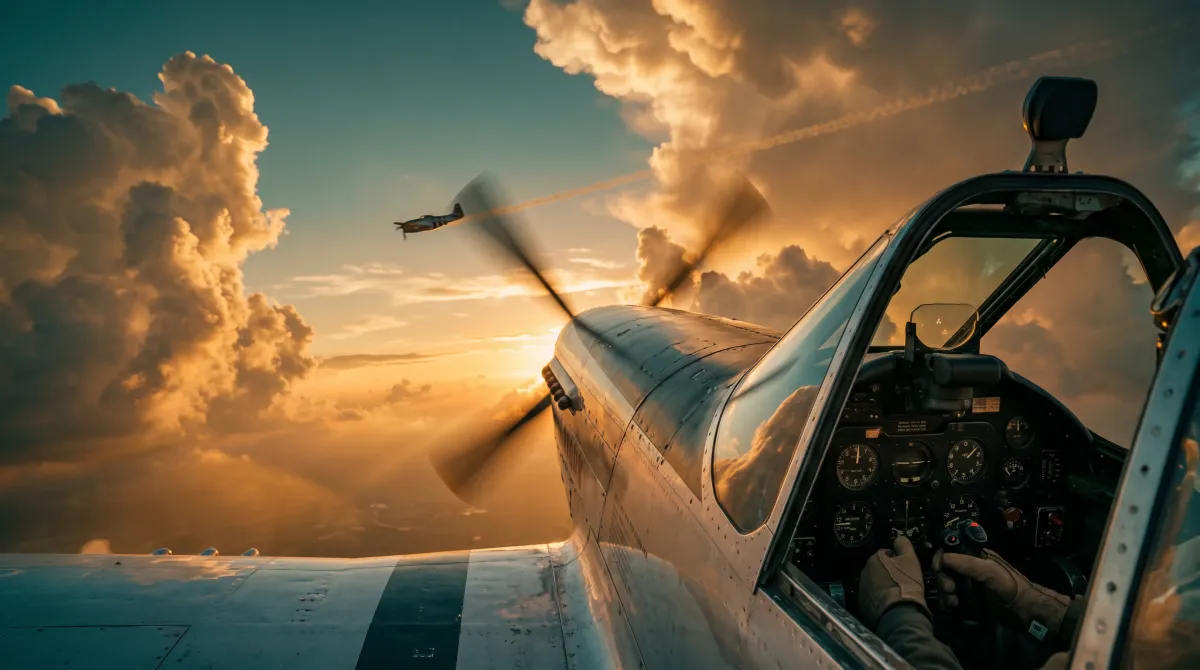
Fly the P-51 Mustang
A guided warbird mission, including formation work with another airplane.
- No prior experience required
- Full aircraft and outside view in the headset
The machine you want does not fit in a Manhattan apartment, and building it new today runs from about $7,000 to past $13,000 before you find the floor space. Ours are already built, mapped, and maintained. Book an hour and fly F/A-18 Hornet, F-16 Fighting Falcon, A-10 Thunderbolt II, and P-51 Mustang or cessna 172 skyhawk and cirrus sr20.

Studio and flight images are AI-generated previews of the space and experiences.
Fly one here first. Buy every part new today and the cheapest credible build lands near $7,000, a good one past $13,000, before a seat or a square foot of Manhattan floor. Ours are already built, mapped, and maintained. Fly a session, then decide how many hours you would really put on a machine of your own.
| Line item | Build it at home | Fly it here |
|---|---|---|
| The PC that drives it | $2,100 to $5,600, or $9,499 from a flight-sim builder | Included |
| VR headset | $600 to $1,100 | Included |
| Force-feedback stick, throttle, pedals | Stick $648 to $2,065, throttle $130 to $350, pedals $130 to $600 | Included |
| Motion platform, 2 degrees of freedom | $2,699 plus $580 shipping, and it arrives without a seat | Included once motion is live after opening |
| Simulator software and first add-ons | $70 to $200, plus about $68 for one study-level airplane | Included |
| Setup before the first real flight | 3 to 5 hours to assemble the platform, then several sessions tuning comfort and mapping buttons | None. It is mapped and running when you sit down |
| Who fixes it when it breaks | You do | Not your problem |
| What it costs you when you stop flying | It keeps its corner of the apartment | Nothing. You stop booking |
| Total, bought new today | Roughly $7,000 to $13,000, before a seat, cabling, or floor space | One session price, booked by the hour |
Home figures price one station from manufacturer, vendor, and retailer listings read on September 11, 2026.
The launch lineup is F/A-18 Hornet, F-16 Fighting Falcon, A-10 Thunderbolt II, and P-51 Mustang, plus cessna 172 skyhawk and cirrus sr20 in X-Plane 12, all of it at launch. Take F/A-18 Hornet, F-16 Fighting Falcon, and A-10 Thunderbolt II for a guided jet mission, the P-51 Mustang for formation work, or the civil side for scenic routes, traffic patterns, and landings.
Every aircraft is flown from the same force-feedback stick, combat throttle, and rudder pedals, and the civil airplanes do not switch to a yoke. Book an operator for combat, where the mission and aircraft systems matter, and a flight instructor for X-Plane 12 coaching.
A guided warbird mission, including formation work with another airplane.
F/A-18 Hornet, F-16 Fighting Falcon, and A-10 Thunderbolt II missions open the lineup, with an operator running the aircraft and mission setup.
Scenic routes, visual maneuvers, traffic patterns, and landings, with a flight instructor when you want coaching.
A session is 60 minutes total, with 45 minutes in the simulator. Operators run combat missions; flight instructors run X-Plane 12 visual maneuvers, landings, and workload management.
Fear of flying sessions use the room too: an airline pilot flies the trip while you ride as a passenger.
Force-feedback flightstick, combat throttle, and rudder pedals. There is no yoke and no throttle quadrant. Every airplane here is flown from a stick, including cessna 172 skyhawk and cirrus sr20 in X-Plane 12.
A force-feedback stick presses back against your hand as the airplane loads up, so it behaves nothing like a loose desktop joystick. The combat throttle sits under the other hand and the rudder pedals control yaw. You do not need to know the switches: the crew sets the aircraft up and keeps the first minutes on flying rather than menus.
Every airplane, including the Cessna 172 and Cirrus SR20, is flown with a force-feedback flightstick, combat throttle, and rudder pedals, with no yoke and no throttle quadrant
No. Head-tracked fully immersive VR on both stations, with the same headset and controls at each; mixed reality passthrough, which shows the real controls and your own hands inside the headset, is planned for later, after opening, and is not offered at opening. Both stations fly the same aircraft lineup from the same control layout, so it does not matter which one you are seated at.
Neither station is sold by headset brand. Two identical fully immersive VR stations. Both get 2 degrees of freedom of motion, pitch and roll, after opening. Mixed reality, where you glance at the real controls and your own hands without leaving the scene, is coming later and will be announced when it is ready.
Both stations are fully immersive VR with the same headset and controls. Each one replaces the room with the virtual aircraft and outside world.
Seeing the real controls and your own hands inside the headset is planned for after opening. It is not offered at opening, and it is not a reason to pick one station over the other.
Platform motion is not available at opening. Two identical fully immersive VR stations. Both get 2 degrees of freedom of motion, pitch and roll, after opening. The aircraft lineup and 45 minutes of flying start at opening, so F/A-18 Hornet, F-16 Fighting Falcon, A-10 Thunderbolt II, and P-51 Mustang and cessna 172 skyhawk and cirrus sr20 fly from the first day.
Once motion is live, each station will pitch and roll with the aircraft, so a bank is felt through the seat instead of seen only in the headset. The menu, controls, and session clock do not change, but the price does. We publish the live date when commissioning is complete.
Yes. Beginners fly without studying aircraft systems or simulator software first. The operator fits the headset, explains the force-feedback stick, combat throttle, and rudder pedals, loads the mission, and handles the menus. Start with a guided combat scenario, a P-51 Mustang formation flight, or a civil flight in X-Plane 12.
Children are welcome from age 8 with a flight instructor and from age 10 with an operator. Whoever books confirms the age at checkout, and the crew checks the headset fit before the flight.
The VR simulators are recreational. They are not FAA approved, and time in them does not count toward any certificate, rating, or currency, even with an instructor.
The VR simulators are recreational. They are not FAA approved, and time in them does not count toward any certificate, rating, or currency, even with an instructor. The instructor can coach visual maneuvers, traffic patterns, landings, and workload management in X-Plane 12, but the session stays practice rather than loggable simulator training.
Do not put the time in a pilot logbook as approved training, or toward a certificate, rating, or currency requirement. We keep separate FAA-approved devices for guests who need eligible time. If FAA credit is the goal, use an approved device.
The VR simulators are recreational. They are not FAA approved, and time in them does not count toward any certificate, rating, or currency, even with an instructor.
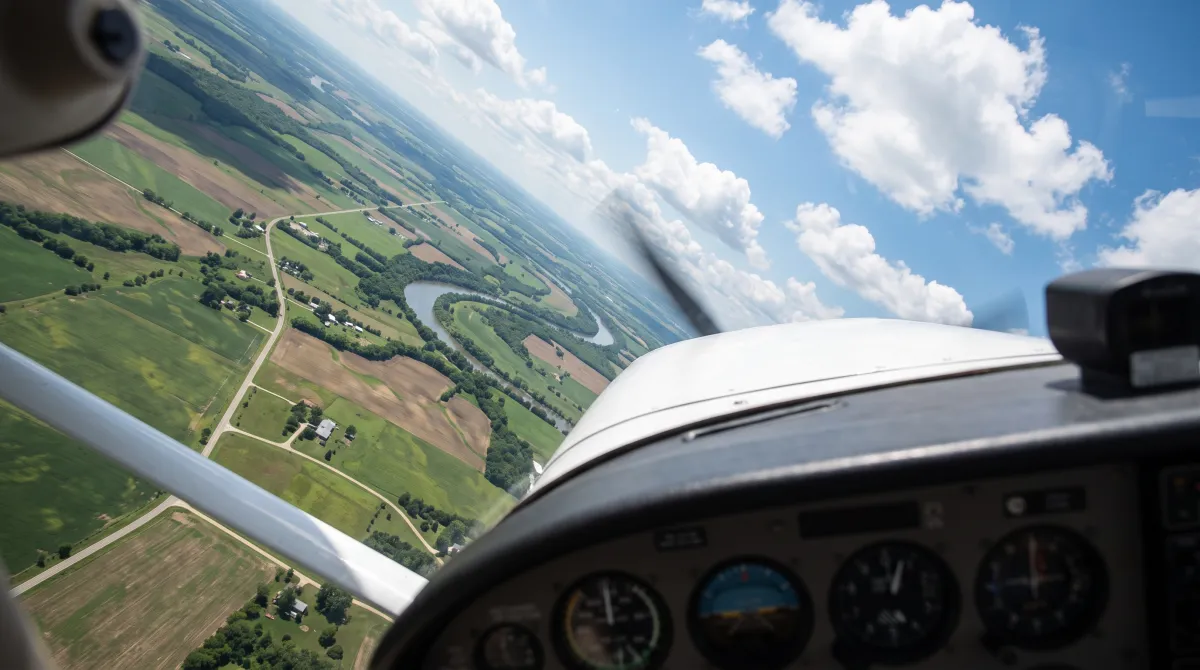
Yes, as the first hour of a two-hour fear of flying session. The headset shows the passenger view while an airline pilot flies the trip from beside you and narrates every sound and movement. There is nothing for you to operate in the VR hour.
You work through seven turbulence levels at the pace you set and can stop at any point. The second hour stays hands-on in the G1000 simulator. Sessions are bookable today at our Midtown Manhattan studio, and you can book both hours in the pilot seat instead. The price is $430 for the two hours, and one support person can sit with you at no charge. This is aviation education, not therapy.
Book an operator for a combat mission and a flight instructor for civil work in X-Plane 12. Operators know the combat flight model, mission, and aircraft systems: they set the aircraft up, brief the objective, manage the scenario, and keep you out of menus.
Choose the instructor when you want to fly a pattern and be told what you did with your eyes and hands: visual maneuvers, landings, and workload management, then a debrief. Either way you get one crew member for the 60 minutes total appointment, and neither choice changes the FAA status.
Runs the F/A-18 Hornet, F-16 Fighting Falcon, A-10 Thunderbolt II, and P-51 Mustang flight model, setup, systems, and mission while you fly.
$30 of the opening session price
Runs visual maneuvers, landings, and workload management, then debriefs it with you.
$130 replaces the operator fee
A session is $95 with an operator or $195 with a flight instructor. A session is 60 minutes total, with 45 minutes in the simulator at Aviator.NYC. Once motion is live, those become $130 and $230.
Booking is open: pick a real date and time online and pay when you book. There is no pass or deposit to buy first, and the questions form does not charge you.
60 minutes total. 45 minutes in the simulator. Combat crew.
$95 at launch
$130 after opening, once motion is live
| Included | Launch | After opening |
|---|---|---|
| VR simulator, 45 minutes flying | $65 | $100 |
| Combat mission operator | $30 | $30 |
| Total per session | $95 | $130 |
60 minutes total. 45 minutes in the simulator. Civil coaching in X-Plane 12.
$195 at launch
$230 after opening, once motion is live
| Included | Launch | After opening |
|---|---|---|
| VR simulator, 45 minutes flying | $65 | $100 |
| Flight instructor | $130 | $130 |
| Total per session | $195 | $230 |
The higher rate starts once motion is live.
VR can leave some guests nauseated or disoriented, including experienced pilots who never get sick in an airplane. A session is 60 minutes total, with 45 minutes in the simulator, and the cap exists so a first headset exposure ends while it still feels good.
Tell the crew at the first sign of nausea, dizziness, or eye fatigue and stop, rather than adapting through it. Sit this one out if headsets already cause strong symptoms for you. If you are pregnant or have a condition affected by visual or balance cues, ask your clinician first. The minimum age is 8 with a flight instructor and 10 with an operator.
A session is 60 minutes total, with 45 minutes in the simulator. The cap is deliberate: a headset asks your eyes and balance system to accept movement your body may not feel, and new users develop fatigue, dizziness, or nausea even when they never get sick in an airplane.
45 minutes of flying is enough to settle in, learn the controls, and finish a scenario while it is still good. The same hour applies to beginners and pilots.
Tell the crew as soon as symptoms begin. Do not try to push through them.
The crew will check the fit. Large or wide frames must not press against the headset lenses.
Flyers aged 10 and up can book, and the crew checks headset fit before a young flyer starts.
A session is 60 minutes total, with 45 minutes in the simulator. The rest of the hour covers headset fitting, a safety brief, and mission setup. You pick a combat mission in F/A-18 Hornet, F-16 Fighting Falcon, and A-10 Thunderbolt II, a warbird flight in the P-51 Mustang, or visual flying in X-Plane 12.
An operator runs the combat missions and handles the menus, aircraft setup, and scenario. A flight instructor takes the civil sessions. Beginners do not need to study beforehand: the crew explains the stick, combat throttle, rudder pedals, and stop signal before the headset goes on.
An operator sets up combat missions; a flight instructor coaches civil flying.
Pick a real date and time online and pay when you book.
Fly before you spend a dollar on hardware. If you buy a machine anyway, talk to us about where it lives.
The VR room is open at the new Midtown studio, inside the Aviator.NYC simulator studio. We do not sell a station and we do not ship one to your apartment, so there is no unit to deliver. What you can rent is time on ours: the stations stay in the studio, you book them by the hour, and a group can take the whole room privately.
Arrival instructions come with a confirmed booking, and Aviator.NYC locations are staffed by appointment only, so do not plan a walk-in visit. Book online to pick a date and time.
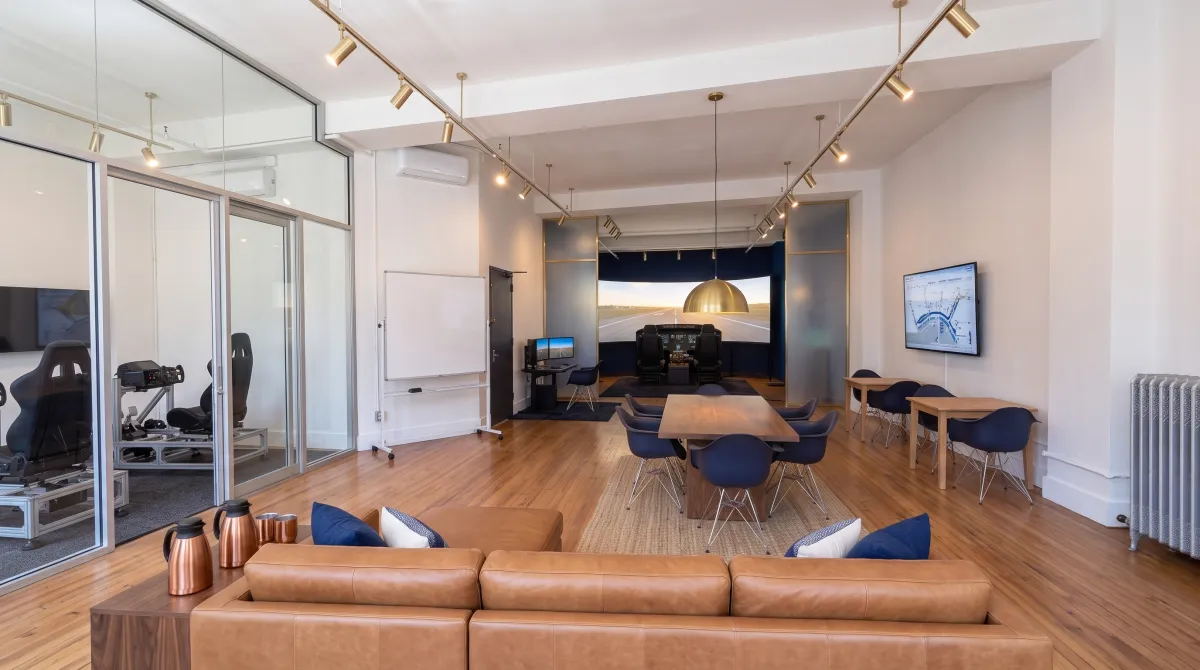
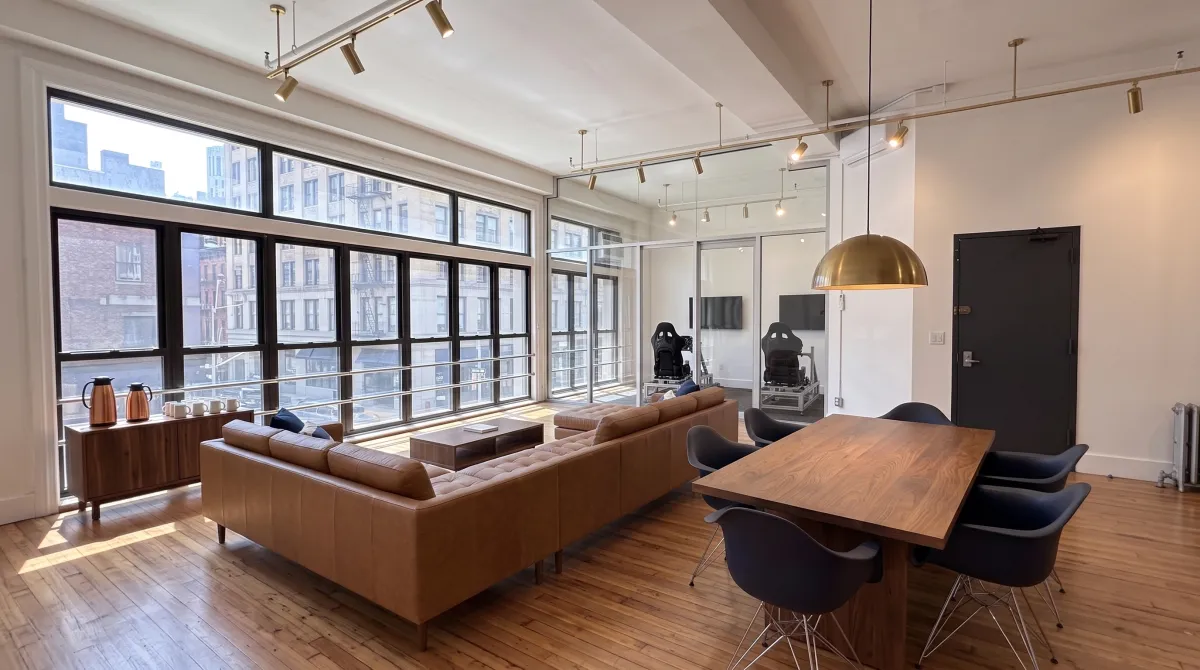
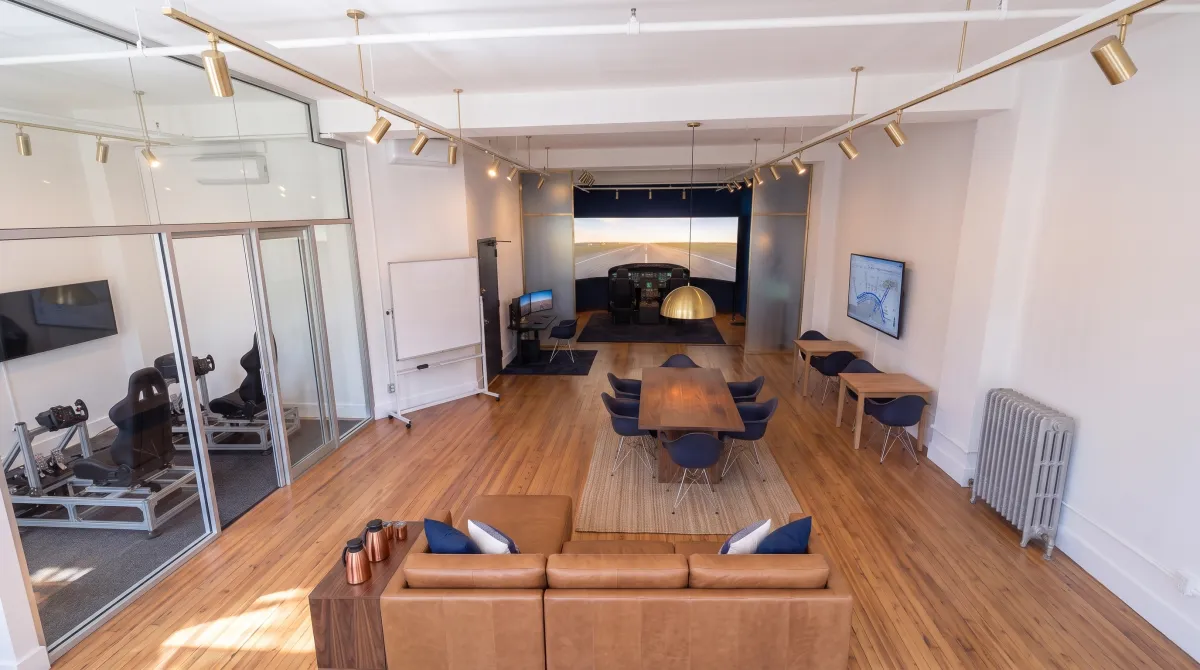
Studio and flight images are AI-generated previews of the space and experiences.
Yes. A group can reserve the whole VR room on site. We do not deliver the stations to another venue. The room holds both stations, so two guests fly at once while the rest of the group rotates.
Staff run the stations and keep each changeover organized. An individual booking stays 60 minutes total, with 45 minutes in the simulator, while a private event holds the space for a two-hour or three-hour block, priced by the space and duration, not by headcount.
| Rent the space | 2-hour event | 3-hour event | Private studio |
|---|---|---|---|
| G1000 Simulator Only | $520up to 2 guests | $775up to 6 guests | Shared |
| Cirrus SR Series Simulator OnlyReserve by request until the Cirrus simulators are online | $700up to 2 guests | $1,045up to 6 guests | Shared |
| SF50 Vision Jet Simulator OnlyReserve by request until the Cirrus simulators are online | $820up to 2 guests | $1,225up to 6 guests | Shared |
| G1000 + Cirrus SR Series SimulatorsReserve by request until the Cirrus simulators are online | $1,215up to 4 guests | $1,820up to 12 guests | Shared |
| VR Room Only | $750up to 4 guests | $1,100up to 8 guests | Shared |
| VR Room + G1000 SimulatorMidtown launch special through November 30, 2026 | Regular price | Regular price | Shared |
| VR Room + Cirrus SR Series SimulatorReserve by request until the Cirrus simulators are online | $1,800up to 6 guests | $2,650up to 12 guests | Shared |
| Full Facility (all five simulators)Reserve by request until the Cirrus simulators are online | $2,330up to 8 guests | $3,495up to 16 guests | Yes |
A standard VR appointment is 60 minutes total with 45 minutes in the simulator. Private events hold a space for two or three hours so guests can rotate, and the VR room price steps up once motion is live.
Renting, flying without a crew member, and wearing glasses in the headset.
Not a unit of your own, and not with motion on opening day: both stations add pitch and roll after opening. Aviator.NYC does not sell a simulator, ship one to your apartment, or bring one to your venue. What you can rent is time on ours: both stations stay in the Midtown Manhattan studio, and you book them by the hour or take the room privately.
No. Every session includes one crew member for the full hour, and there is no unattended or self-serve option. A session is 60 minutes total, with 45 minutes in the simulator. Operators run combat missions; flight instructors run X-Plane 12 visual maneuvers, landings, and workload management.
Yes, as long as the frames sit inside the headset without pressing on the lenses. The crew checks the fit before your flying time starts, and large or wide frames are the usual problem.
Tell us what you would fly and what you want to know. We reply by email. The form does not charge you or hold a date.
It happens. Someone flies here, wants their own, and ends up with a rig that outclasses ours and an apartment that cannot take it. If that is you, we may be able to house it here, run it, and keep it flying, so it gets used instead of stored.
Nothing about an arrangement like that is published on this page, because each one is different. Start the conversation on the investor page.
The VR simulators are recreational. They are not FAA approved, and time in them does not count toward any certificate, rating, or currency, even with an instructor. A session is 60 minutes total, with 45 minutes in the simulator.