What Does an SF50 Vision Jet Type Rating Cost, and How Do You Prep?
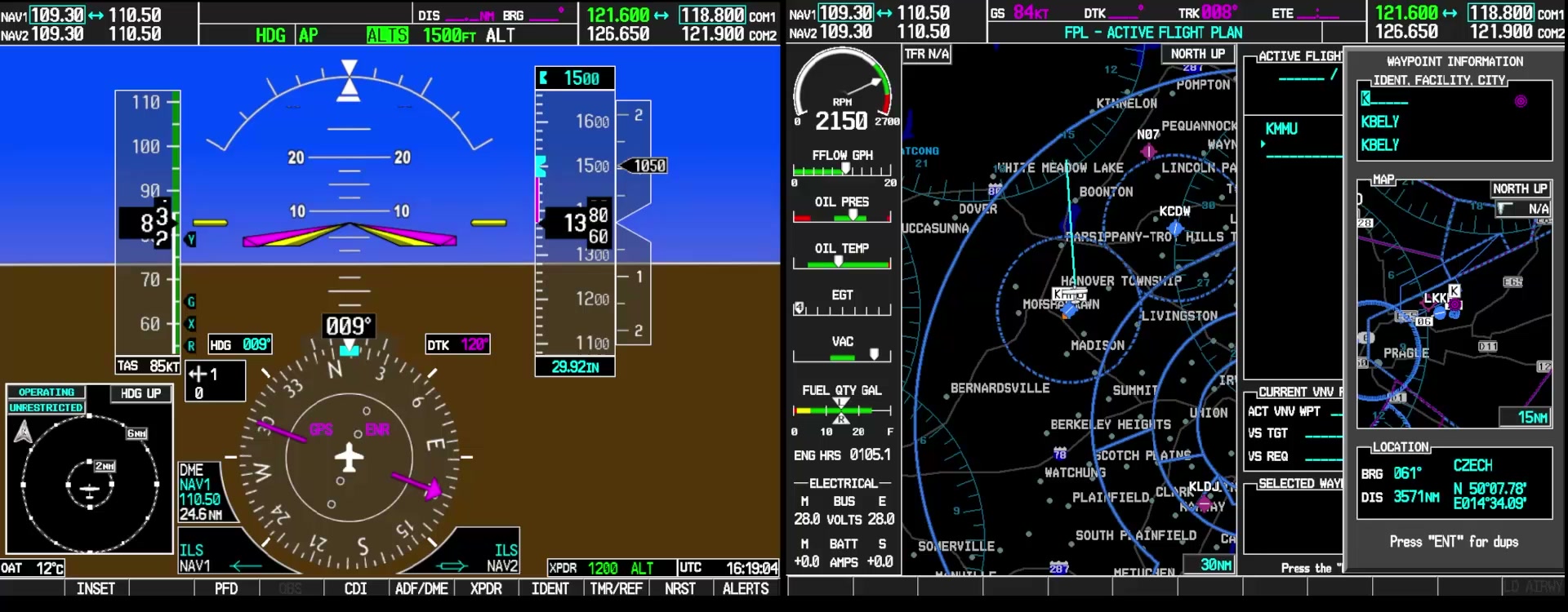
Your type rating costs $31,000+ and moves fast. Build professional-grade IFR skills, flows, and automation discipline on our King Air 200 G1000 NXi, the same avionics foundation used in modern jets. 6-12 hours of focused prep depending on your proficiency. Cirrus simulators: Delayed to 2027. It will run at the new Midtown studio.
What GA Flying Doesn't Demand, Jets Will
In GA, gear, flaps, and speeds are flexible. In jets, every step is timed and standardized. That discipline isn't optional. It's the standard.
Single-Pilot Jets Demand Complete Mastery
Flying alone in a high-performance jet leaves no room for gaps. Automation mistakes compound fast, energy management slips, and suddenly you're behind the airplane with no one to catch it.
Professional Standards Aren't Optional
Type rating evaluators expect precise flows, callouts, and profiles from day one. Show up unprepared, and they'll question your discipline and your ability to command the aircraft.
Your Passengers Deserve Professional Operations
Family, clients, or colleagues trust you with their lives. Weak decision-making, sloppy planning, or unclear briefings aren't just unprofessional. They're unsafe.

Build Vision Jet G3000 Proficiency Before Type Rating
Prepare for SF50 training by building Garmin G3000 Perspective Touch+ fluency before your type-rating course. Practice single-pilot IFR workflows, automation, and avionics sequencing so course time is spent performing, not learning the system from zero.
Your Path to Type Rating Readiness
3 Steps to Arrive Prepared
Whether your SF50, Citation 525, or Phenom type rating is 30 days away or 6 months, we build the IFR discipline type rating centers expect.
Identify Your Gaps
A type-rated instructor evaluates your IFR fundamentals and builds a focused prep plan based on your proficiency level.
Build Professional Discipline
Focused simulator sessions on our King Air 200 G1000 NXi targeting your specific gaps. Flows, callouts, automation, approach discipline: everything type rating centers expect.
Perform, Don't Learn
Show up to your type rating center ready to focus on your jet's systems, not fix IFR fundamentals on a $31,000 program.
Type Rating Centers Won't Reteach IFR Fundamentals
You're paying for a certified full-flight simulator and an expert on your aircraft. They expect professional-level IFR skills already in place.
Train With Type-Rated Pilots
You'll fly with instructors who hold multiple type ratings and command jets professionally. They understand single-pilot jet operations and what type rating evaluators expect from day one.
Build IFR Skills Before Your $31K Program
You'll train on our King Air 200 G1000 NXi AATD with worldwide database: SID/STAR procedures, VNAV descents, holds, and approach discipline. Build the skills type rating centers assume you already have.
Transform GA Habits Into Jet Discipline
You'll replace casual GA approaches with the structured flows, callouts, and decision-making jet operations demand. Arrive at type rating school performing, not learning the basics.
Where Do You Start?
Two tracks based on your current proficiency. Your instructor validates and adjusts on the first session.
I Need to Rebuild the Basics
$1,080/day6-hour block (two 3-hour sessions) at $180/hrFull program: 4 days — contact us to coordinate →I'm Proficient but Need Sharpening
$1,080/day6-hour block (two 3-hour sessions) at $180/hrStage 2: 2 days — contact us to coordinate →Recently current or flew within the last 1-2 years. Comfortable with IFR fundamentals. Need scenario-based practice and professional discipline before type rating school.
- Jump directly into LOFT scenarios
- Real-world trip profiles with Part 91 ops
- Type rating readiness focus
- Instructor validates gaps on first session
IFR Fundamentals Refresh
4 structured lessons (~3 hours each). Rebuild core instrument skills from the ground up — even experienced pilots benefit after time away.
Basic Instrument & Approach Setup
- Instrument scan refresh (attitude, heading, altitude, airspeed)
- Instrument approach briefing technique
- VOR navigation fundamentals
- G1000 NXi avionics familiarization
- Approach setup in the avionics suite
Holds & VOR/LOC Approaches
- Holding pattern entries and procedures
- VOR: KMSO, KSMX VOR 12, SBA VOR 25
- LOC: SAN LOC 27, SMX BC-A (back course)
Precision & Performance-Based Approaches
- ILS: JFK, LAX, SFO
- RNAV (GPS): SFO, DEN, SLC
- LDA: KTVL Rwy 18 (South Lake Tahoe)
- Special: EGE Rwy 25 (Eagle/Vail)
SIDs, STARs & Integration
- SIDs from KTEB (Teterboro)
- STARs into KLAX (Los Angeles)
- Fuel planning
- Full integration flight: departure to arrival
LOFT Scenarios
Line Oriented Flight Training. Complete trip profiles — flight planning, departure, en route, arrival, and approach — with Part 91 operations and decision-making built in.
All LOFT scenarios qualify for FAA WINGS credit. Activities must be performed to ACS (Airman Certification Standards) to receive credit.
Procedures
Mountainous terrain, complex STAR
High-altitude operations, terrain
Procedures
Complex IFR procedures, mountain terrain
Complex IFR procedures, alpine terrain
Part 91 Operations for Jets
Integrated throughout Stage 2 LOFTs. These are the operational standards type rating centers expect you to know.
Fuel Planning
14 CFR 91.167- IFR fuel requirements (destination + 45 min)
- Alternate fuel when required
- Reserve planning for single-pilot operations
- Real-world fuel scenarios on LOFT routes
Alternate Requirements
14 CFR 91.169- When an alternate is required (1-2-3 rule under Part 91)
- Alternate weather minimums
- Choosing practical alternates for jet operations
Performance & Limitations
14 CFR 91.9 / POH- Takeoff and landing performance calculations
- Weight & balance for jet operations
- Runway analysis and contaminated surfaces
- High altitude / hot weather performance
Single-Pilot Operations
14 CFR 91.3- Workload management without a copilot
- Automation discipline — command the FMS
- Flows and callouts for single-pilot environments
- Decision-making under high workload
Weather Decision-Making
14 CFR 91.175 / 91.155- Precision approach minimums (DA/DH)
- Non-precision approach minimums (MDA)
- Personal minimums for single-pilot jets
- Icing, convective weather, and go/no-go
Approach & Landing
14 CFR 91.175- Stabilized approach criteria for jets
- Energy management on descent and approach
- Go-around decision-making at jet speeds
- Visual references required at DA/MDA
Intensive Training Schedule
Each stage is completed in 2 days. Two 3-hour lessons per day.
Stage 1 — Fundamentals
Stage 2 — LOFTs
Stage 2 only? You need just 2 days. Full program is 4 days, 24 hours of simulator time.
Traveling for Training?
We regularly train pilots from across the country. Fill out the contact form so we can coordinate your schedule, recommend accommodations, and discuss bundle pricing.
Midtown Manhattan
Walking distance to our training facility. Premium pricing but zero commute — maximize your training time.
RecommendedJersey City (PATH Train)
More practical on price, especially for multi-day stays. Adds commute time via PATH train to Manhattan.
Budget-FriendlyVision Jet Type Rating Prep on the Actual G3000
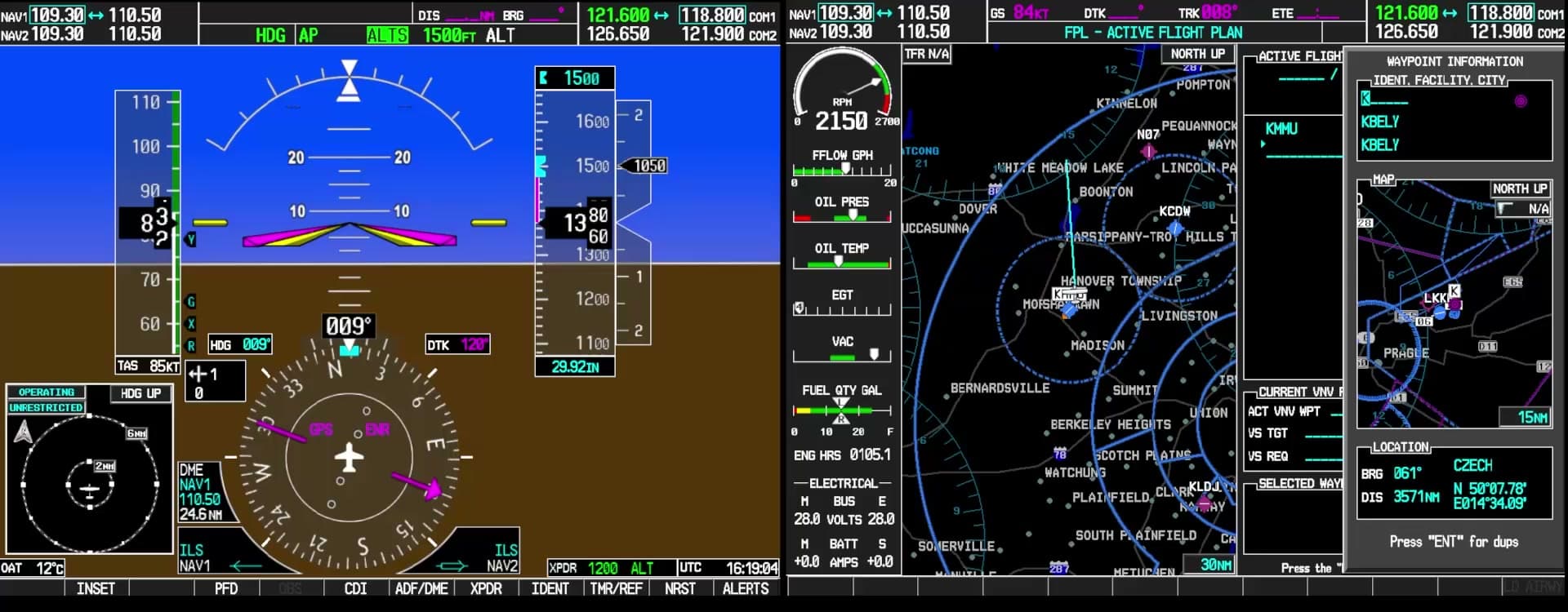
Our King Air G1000 NXi builds IFR discipline: flows, approaches, automation mastery. Our new dedicated SF50 Vision Jet simulator will add avionics-specific proficiency on the exact cockpit you will fly in the SF50: a single-seat machine with its own FAA AATD approval, separate from our SR20/SR22 simulator. The King Air already trains at our Midtown Manhattan studio.
King Air G1000 NXi
Build professional-grade IFR discipline. Flows, callouts, automation logic, VNAV descents, holds. The universal foundation every jet demands.
From $215/hr dualSF50 Vision Jet Simulator
Once it arrives, sharpen G3000-specific skills on the dedicated single-seat Vision Jet machine. Touchscreen workflows, GTC 580 pages, synthetic vision, autopilot coupling: the exact avionics in the SF50.
From $340/hr (forecast, 2-hour minimum)
Why Jet Owners Train
at Aviator.NYC
Build professional-grade IFR discipline before type rating school. Train with the tools and standards your jet will demand.
King Air 200 G1000 NXi With Worldwide Database
FAA-certified AATD with global navigation data. Fly procedures at any airport in the world, from TEB to Caribbean destinations to South American approaches. Perfect for training the routes you'll actually fly.
FAA WINGS-Approved Scenarios
Training scenarios build proficiency while accomplishing FAA Safety WINGS activities. Real-world routes, not generic drills: TEB to BOS, DEN to JAC, or your actual mission profiles.
Jeppesen Charts & Airline Standards
Practice with the same Jeppesen charts and standardized flows type rating centers use. Nothing feels new on day one because you've already trained to professional standards.
Midtown Manhattan for Busy Professionals
Open at 35 West 31st Street, Suite 901. Build IFR discipline on our King Air G1000 NXi in Midtown Manhattan today. Our dedicated SF50 Vision Jet simulator will add G3000 avionics practice. Delayed to 2027. It will run at the new Midtown studio. No airport commute or weather cancellations.
A Simulator Built for Serious Training
Built by Precision Flight Controls • Model GTX G1000 • FAA AATD Certified
Flight Simulator Center in NYC
Our FAA-approved simulator facility brings professional flight training to New York City. Not a massive training center—just focused, one-on-one instruction with airline pilots in a comfortable office environment.
Location
TRAIN TO FLY IN MANHATTAN
Midtown Manhattan

Loading reviews...
Tap any station for live arrival times
What Is the FAA WINGS Program?
WINGS is the FAA's voluntary Pilot Proficiency Program. Complete activities at your level to earn credits toward a WINGS phase — which can replace your flight review. Our simulator sessions are FAA-accepted WINGS activities at three proficiency levels.
master Level
ATP/CFI ACS
3 credits per session
Airport operations + flight operations + knowledge
Each session earns 3 of 4 credits needed. One Risk Management credit completes the phase.
advanced Level
Commercial ACS
2 credits per session
Flight operations + knowledge
Each session earns 2 of 4 credits needed. Two sessions plus knowledge activities complete the phase.
basic Level
Private Pilot / Instrument ACS
2 credits per session
Flight operations + knowledge
Each session earns 2 of 6 credits needed. Three sessions plus knowledge activities complete the phase.
Which Scenarios Can You Fly?
Every session is different. Pick any scenario below — each one earns FAA WINGS credit and challenges a different instrument skill. No required order.
Structured IFR currency session to regain or maintain instrument currency under 14 CFR §61.57(c). Six approaches, holding, and intercepting/tracking.
Mountain IFR flying through Colorado with convective weather and terrain challenges.
Desert-to-urban IFR with high density altitude, terrain, and busy Class B airspace.
Mountain crossing IFR through the Cascades with icing and low visibility.
Get-home-itis scenario with deteriorating weather and decision-making pressure.
Coastal IFR with marine layer, fog, and fatigue/business pressure decision-making.
Short-hop IFR through NYC Class B with complex arrival procedures and unfamiliar aircraft.
Corporate flight into major Class B airport with sequencing, speed restrictions, and personal urgency.
Medical delivery mission under time pressure with low IFR conditions.
Transport-category profile with full SID/STAR sequencing. Airline interview prep and single-pilot jet IFR training.
Northeast corridor IFR with Class B departures, busy ATC, and complex arrival procedures.
Mountain IFR into challenging terrain with special approach procedures and weather considerations.
Mountain resort destination with terrain challenges, special procedures, and weather decision-making.
Hawaiian inter-island IFR with oceanic procedures, volcanic terrain, and tropical weather.
South American high-altitude IFR with challenging terrain, international procedures, and mountain weather.
Hub-to-hub STAR flow with "descend via" clearance, NorCal flow control, and marine layer ILS.
Mid-Atlantic coastal IFR through military airspace with Chesapeake Bay moisture and low-IFR arrival.
Business jet northeast corridor with Class B departure, reroute amendments, and BOS STAR compression.
Caribbean overwater IFR with tropical convection, limited diversion options, and island terrain approach.
High-altitude hub with terrain-ringed basin, rigid STAR step-downs, and 7,316-foot elevation approach.
Complex Heathrow SID with multiple constraints, European procedures, and Alpine terrain approach.
Short-haul Alpine IFR with FOEHN winds, terrain-constrained MEAs, and compressed task timeline.
View all 22 WINGS scenarios and earn FAA proficiency credits →
Which simulator supports type rating and interview preparation?
Midtown studio: Open at 35 West 31st Street, Suite 901.
You are preparing for a type rating, keeping a type current, or getting ready for an airline interview, where the standard is precision under load rather than familiarity.
Type rating and interview preparation are expensive and time-boxed, and generic simulator time does not prepare you for either.
Two of our devices carry turbine profiles, and they serve different ends of that preparation.
How to choose
- For jet-specific work, the dedicated SF50 Vision Jet simulator: type rating preparation, type currency practice, and single-pilot jet discipline.
- For multi-engine turbine handling and raw instrument precision, the G1000 carries a King Air B200 profile with the full GFC 700 automation suite.
- For an airline interview, focus on the standard rather than the airframe: hand-flown precision, briefings, and automation management assessed the way an evaluator assesses them.
| G1000 | Cirrus SR Delayed to 2027 | |
|---|---|---|
| Aircraft | Cessna 172R / 172S, Cessna 182T / T182T, Piper Archer, and Diamond DA40 | Cirrus SR20 and Cirrus SR22 |
| Avionics | Garmin G1000 NXi | Garmin Perspective Touch+ (G3000 displays, GTC 580 controllers) |
| Panel type | Knobs and soft keys | Touchscreen controllers |
| Autopilot | GFC 700 | GFC 700 |
| Software | Garmin G1000 PC Trainer (manufacturer software) | Cirrus Perspective Touch+ profile on X-Plane 12 |
| FAA status | FAA-approved AATD, loggable with an instructor | FAA-approved AATD, loggable with an instructor |
| Available | Now, in Midtown Manhattan | Delayed to 2027. It will run at the new Midtown studio. |
What you get
You arrive at the course or the interview having already flown the profile, with the procedures cold.
What it costs to guess
A failed type ride or interview costs far more than the preparation would have, and the second attempt is graded harder.
These are not video games
The G1000 simulator is an FAA-approved Advanced Aviation Training Device (AATD). Flown with an instructor, the time counts toward the instrument rating, instrument currency, the private pilot certificate, and the commercial certificate.
The Cirrus SR simulator will be an FAA-approved Advanced Aviation Training Device (AATD). Flown with an instructor, the time will count toward the instrument rating and instrument currency.
The Vision Jet simulator will be an FAA-approved Advanced Aviation Training Device (AATD). Flown with an instructor, the time will count toward the instrument rating, instrument currency, and type rating preparation.
The VR simulators are recreational. They are not FAA approved, and time in them does not count toward any certificate, rating, or currency, even with an instructor.
Type Rating Prep FAQs
What Aviator.NYC offers vs formal type rating, and which simulator to use.
Type Rating Prep
What Aviator NYC offers vs the formal type rating, and which simulator to use.
Aviator NYC provides type rating preparation — building avionics proficiency and IFR discipline before you spend $31,000+ at a formal type rating program.
- We do NOT issue type ratings — only FAA-authorized training centers can do that
- Prep will focus on G3000 avionics mastery, single-pilot jet procedures, and IFR flows
- Students who arrive at type rating programs already proficient on the avionics finish faster
- Saves time and money by reducing the learning curve at the formal program
Aviator.NYC will use a dedicated single-seat SF50 Vision Jet simulator (its own FAA AATD, separate from our SR20/SR22 simulator) for Vision Jet type rating prep.
- SF50 simulator for Vision Jet prep: touchscreen flight planning, autopilot modes, approach coupling
- G1000 NXi for general jet-transition IFR discipline
- Both are FAA-approved AATDs with loggable hours
- G1000 → SF50 progression for pilots upgrading from piston to jet avionics
Aviator.NYC's Vision Jet prep will build G3000 Perspective Touch+ proficiency and single-pilot jet automation skills on the dedicated SF50 simulator.
- Jet-specific speed management, automation, and approach procedures
- Single-pilot CRM and decision-making under higher workload
- Build muscle memory on the G3000 touchscreen before the formal type rating
- Most Vision Jet type rating programs assume basic G3000 proficiency — arrive ahead of the curve
Plan Your Type Rating Prep
Tell us about your aircraft and timeline. We'll coordinate scheduling, accommodations, and bundle pricing.