Classes for adults and kids, and our Open House, in Midtown Manhattan.Events in MidtownSee upcoming events
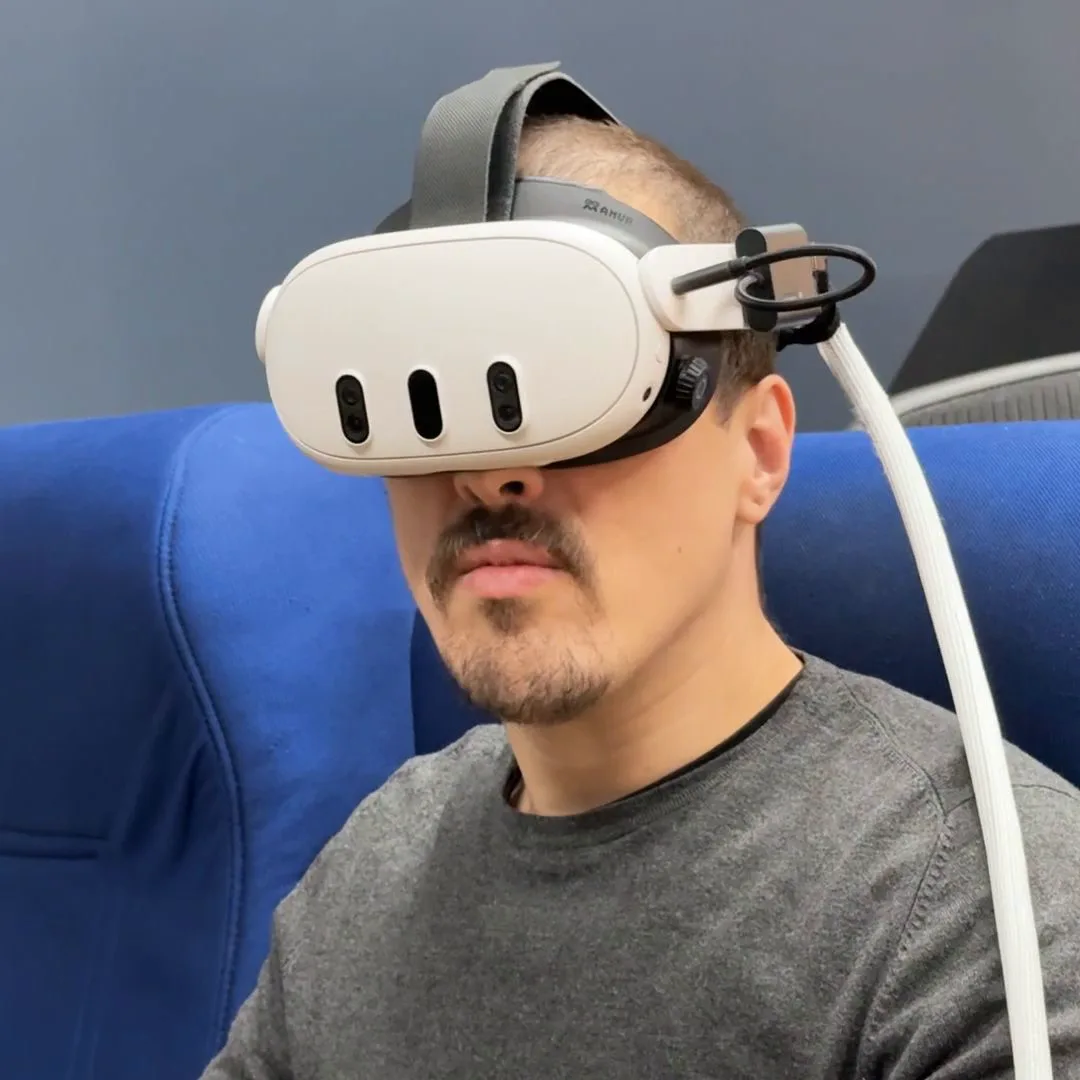
A guest exploring the VR flight deck at Aviator.NYC in Midtown Manhattan
Learn Under Airline Pilot Leadership

Ready to Fly Again? Fear of Flying Classes With NYC Airline Pilots

Flight instructors, not therapists. Our team is airline pilot-led. We explain what happens on your flight, so the sounds and bumps make sense.

What You Fear Is Routine for Us
Our airline pilot-led team shares insights from professional flying
Learn in a Safe Environment
Midtown Manhattan or by Zoom. No airport, no pressure.
Know What Is Happening
A pilot's knowledge changes how each phase of flight feels.
Two simulators, one point of view

Which simulator will I sit in?

See a flight from the pilot’s seat in VR, or learn the controls in the G1000. Your instructor explains what happens, and you can pause either experience whenever you need.

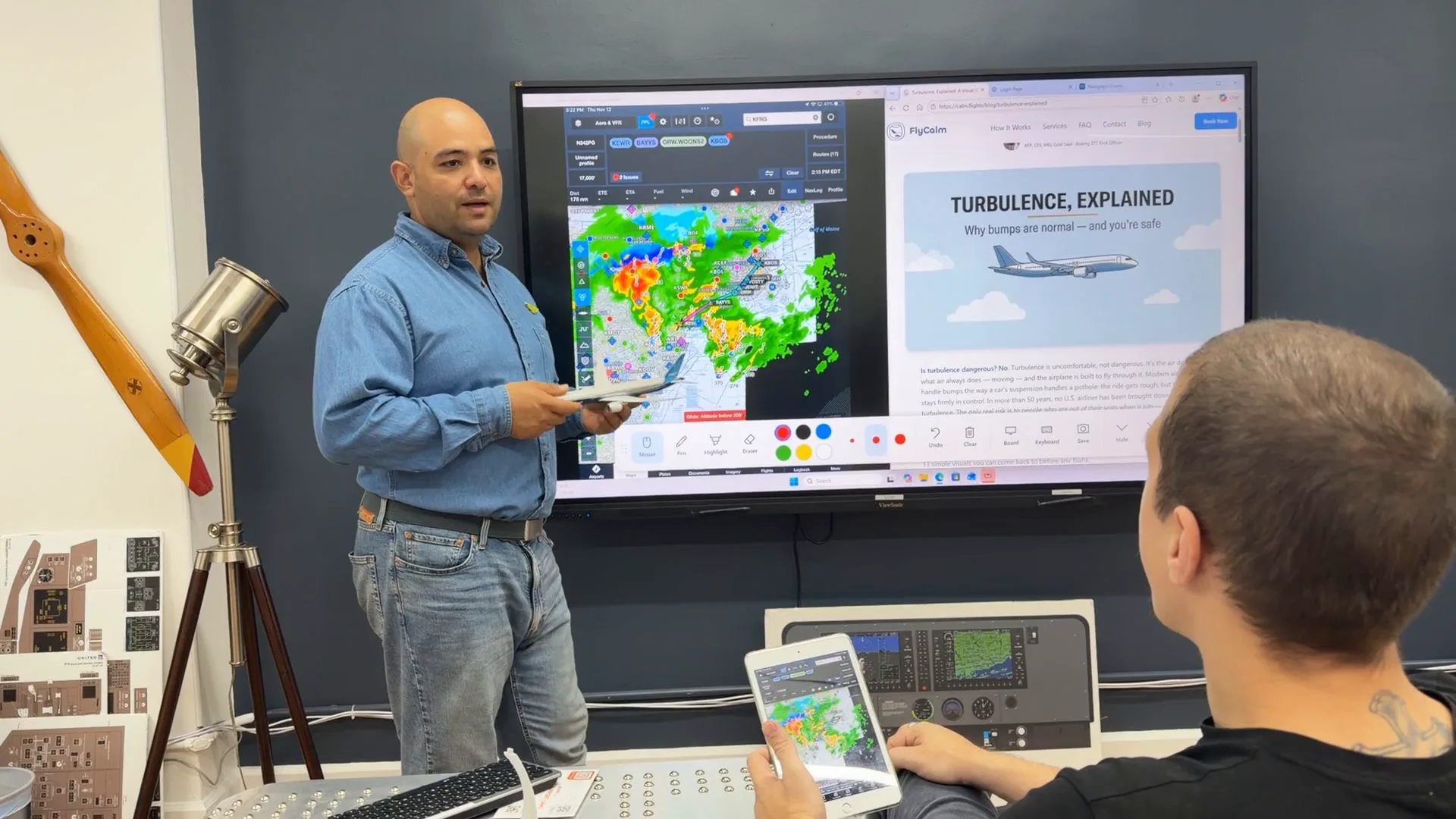
A guest and an instructor at the briefing table, then flying the G1000 simulator together

Watch the flight in VR

You sit in the pilot seat of an airliner while an airline pilot takes you through a flight. Look around, ask what every sound and call means, and stop at any point.

The VR simulators are recreational and not FAA approved. Time in them does not currently count toward a certificate, rating, or currency, even with an instructor, and would need a certification process before it could.

Take the controls in the G1000

Take the controls of a Cessna 172 in the G1000 simulator and learn the basics of flight, much like a first lesson. Your instructor helps you understand what the pilot is thinking.

The G1000 simulator is an FAA-approved Advanced Aviation Training Device (AATD).

What worries a passenger is rarely what the pilots are watching. Pilots train for the unlikely cases, so the flight deck stays calm and routine when one happens.

What Happens When You Arrive

Your pilot adjusts the session to your questions and concerns.

A first visit, from the briefing table to the simulators

The 2-Hour Session

  1. Briefing

    We start with a conversation, for as long as your questions need.

  2. The VR flight deck

    Your pilot flies and narrates the trip. Ask about the sounds, the planning and what pilots watch during turbulence. You can stop at any point.

  3. Hands-on in the G1000

    Try the controls with a flight instructor beside you. Connect what you see and do to the sensations you notice as a passenger.

  4. Questions and next steps

    Talk through what you noticed and what to expect on your next flight.

The 3-Hour Session

  1. Briefing

    Start with your concerns and a briefing, for as long as your questions need.

  2. The VR flight deck

    Spend an hour seeing the flight from the pilot’s seat, with your pilot narrating and answering questions.

  3. Hands-on in the G1000 (two hours)

    Take the controls with your instructor beside you and explore the basics of flight, with time to try things again.

  4. Questions and next steps

    Talk through what you noticed and what to expect on your next flight.

How would you like to start?

Start with the 2-hour session, or talk through your concerns on a call or by Zoom.

Recommended start

2-Hour Session

2 Hours · In-person in Midtown Manhattan

Start with a briefing, for as long as your questions need. One hour in the VR headset as a passenger, then one hour hands-on in the G1000 simulator, with the same flight instructor throughout. Both hours can be in VR or in the G1000 on request.

What is included
  • VR passenger hour with a flight instructor
  • G1000 simulator hour, pilot seat
  • Your pilot adjusts the session to what you need on the day.
  • Bring one support person to sit with you at no charge
  • Questions and next steps for your next flight

Tell us when booking if you would like to stay on one simulator for the whole visit.

3-Hour Session

3 Hours · In-person in Midtown Manhattan

Start with a briefing, then spend an hour in the VR flight deck and two hands-on hours in the G1000.

What is included
  • VR passenger hour with a flight instructor
  • G1000 simulator hour, pilot seat
  • Second G1000 simulator hour, pilot seat
  • An additional hands-on hour to explore the basics of flight
  • Questions and next steps for your next flight
  • Bring one support person to sit with you at no charge

The extra time at the controls lets you revisit what you noticed from the flight deck.

VR Flight

90 Minutes · In-person in Midtown Manhattan

Fly one route gate to gate in the VR airliner flight deck, with your pilot beside you and pauses for questions.

What is included
  • Choose a route with your pilot at the start
  • Hear the planning, sounds and flight deck calls explained
  • Nothing to operate; pause whenever you need
  • Bring one support person to sit with you at no charge

You can also use the visit to repeat the part of flying that worries you most.

90-Minute Follow-Up

90 Minutes · In-person in Midtown Manhattan

Return for a 90-minute follow-up in the G1000 or in VR, whichever helps you most.

What is included
  • Revisit questions from your earlier session
  • G1000 controls or the VR flight deck view
  • Bring one support person to sit with you at no charge

Bring back anything you noticed on a recent flight, or prepare for the next one.

15-Minute Pilot Call

15 Minutes · Remote via Zoom or phone

Talk through what worries you before an upcoming flight, or ask where to start.

What is included
  • Questions about your upcoming flight
  • A pilot’s view of the sounds and movements you expect
  • One support person is welcome on the call

A short conversation about your immediate concerns or which session would help you.

1-Hour Zoom Session

1 Hour · Remote via Zoom

Talk with a flight instructor about your concerns and what happens on your flight.

What is included
  • 1 hour for your questions
  • Flight sounds, turbulence and pilot decisions explained
  • Your route and aircraft discussed
  • One support person is welcome on the Zoom call

A longer conversation from home, with time to discuss the parts of flying that worry you.

Compare your options
What is included2-Hour Session3-Hour SessionVR Flight90-Minute Follow-Up15-Minute Pilot Call1-Hour Zoom Session
Questions with a flight instructorAsk about the parts of flying that worry you.YesYesYesYesYesYes
Time to discuss your concerns in depthTalk through the sounds, movements and decisions you want to understand.YesYesYesYesNoYes
VR flight deck viewWatch your pilot fly and explain the trip. The follow-up can use VR or the G1000.YesYesYesYesNoNo
Hands-on G1000 controlsTry the controls with an instructor beside you. The follow-up can use the G1000 or VR.YesYesNoYesNoNo
Join from homeThe pilot call and the Zoom hour are remote sessions.NoNoNoNoYesYes
One support person at no chargeOne support person is welcome at no charge, in person or on the call.YesYesYesYesYesYes

Your pilot adjusts the session to what you need on the day.

Make time for more than one visit

Start with a Zoom conversation, then return to the studio with new questions.

Fear of Flying Program

2 visits · 4.5 hours including Zoom

$955

Before you visit: a 1-hour Zoom session.

  1. 2-hour visit: a briefing, an hour in the VR flight deck, then an hour hands-on in the G1000.
  2. 90-minute follow-up on either simulator, ideally the week of your flight.

Save $50 against booking the visits one at a time ($1,005).

Bring one support person to sit with you at no charge

Use within 90 days.

Book the Program

Fear of Flying Complete

3 visits · 6 hours including Zoom

$1,100

Before you visit: a 1-hour Zoom session.

  1. 2-hour visit: a briefing, an hour in the VR flight deck, then an hour hands-on in the G1000.
  2. 90 minutes: a VR flight or a follow-up, your choice.
  3. 90 minutes: another VR flight or a follow-up, your choice.

Save $280 against booking the visits one at a time ($1,380).

Bring one support person to sit with you at no charge

Use within 90 days.

Book Complete

Fear of Flying Intensive

4 visits · 8.5 hours including Zoom

$1,515

Before you visit: a 1-hour Zoom session.

  1. 3-hour visit: a briefing, an hour in the VR flight deck, then two hours hands-on in the G1000.
  2. 90-minute VR flight, gate to gate with your pilot beside you.
  3. Another 90-minute VR flight, with pauses for your questions.
  4. 90-minute follow-up on either simulator the week of your flight.

Save $455 against booking the visits one at a time ($1,970).

Bring one support person to sit with you at no charge

Use within 90 days.

Book Intensive

Flights we fly together

See the routes we fly

Choose a route with your pilot when you arrive. Each VR flight runs gate to gate, with time in the 90-minute visit to pause and ask questions.

  • New York to Boston

    LGA to BOS · 45 min airborne

    The approach over the harbor

  • New York to Washington

    LGA to DCA · 50 min

    The river approach

  • San Francisco to Los Angeles

    SFO to LAX · 55 min

    The busiest West Coast pair

  • Chicago to Detroit

    ORD to DTW · 45 min

    A Chicago pair inside the hour

  • Miami to Tampa

    MIA to TPA · 40 min

    Florida weather

  • Dallas to Houston

    DFW to IAH · 50 min

    A Texas pair with summer build-ups

  • Atlanta to Charlotte

    ATL to CLT · 50 min

    The busiest hub in the country

  • Las Vegas to Los Angeles

    LAS to LAX · 50 min

    Desert heat and the mountain descent into LA

  • Your own route

    any · under 60 min airborne

    The flight that worries you, if it fits in the hour

Your VR time can also be several takeoffs or several landings, built around the phase of flight that worries you, with questions at any moment.

Who Teaches You

Our team includes active airline pilots and airline pilot-mentored flight instructors.

Julian Alarcon - Boeing 777 Pilot and Flight Instructor

Julian Alarcon

Boeing 777 · ATP, CFII, MEI, Gold Seal

Major U.S. Airline

Helping anxious passengers understand what pilots do in wide-body jets on long-haul routes

Peter Lynde - Boeing 737 Captain and Flight Instructor

Peter Lynde

Boeing 737 · ATP, CFII, MEI

Major U.S. Airline

Explaining flight operations and turbulence management from a captain's perspective

Elijah Burgess - Boeing 737 First Officer and Flight Instructor

Elijah Burgess

Boeing 737 · ATP, CFII, Gold Seal

Major U.S. Airline

Breaking down complex concepts into understandable explanations

Charles Canavan - Boeing 737 Pilot and Flight Instructor

Charles Canavan

Boeing 737 · ATP, CFII, Gold Seal

Major U.S. Airline

Sharing real-world airline operations and safety procedures

Real Flying Experience

Our team includes pilots who fly these routes professionally for major airlines out of NYC, through weather, turbulence, and situations that worry passengers. Their experience informs our approach to explaining flight.

Teaching Background

We've taught thousands of people to fly. We know how to explain complex aviation topics in ways that make sense, without jargon or condescension.

Pilot Perspective

What's routine for airline pilots can cause intense anxiety for passengers. We bridge that gap with knowledge and understanding.

I had a passenger tell me she hadn't flown in 14 years. After one session, she flew home to see her mom.

Julian Alarcon, Boeing 777 Pilot
Honest Guidance

When Your Fear Needs More Than a Pilot

We help people who are afraid of turbulence, takeoff, or not understanding what's happening on a flight. But some fears (like claustrophobia or panic disorders) need a therapist, not a pilot.

We'd rather be honest than take your money for something we can't help with.

We Can Help With

  • Turbulence fear
  • Takeoff & landing anxiety
  • Not being in control
  • Not understanding what's happening
  • General flight anxiety

See a Therapist For

  • Claustrophobia
  • Panic disorder
  • Clinical phobia requiring CBT
  • Severe avoidance behavior
  • Trauma-related fear
Recommended Partner

The Cognitive & Wellness Center

Dr. Peter J. Economou, PhD, ABPP

CBT-based anxiety & phobia specialists

NYC · Hoboken · New Jersey

How It Works

Three steps to understanding flight from the pilot's perspective.

Step 1

Book

Start with the 2-hour session, or talk to a pilot first on a 15-minute call.

Step 2

Learn

A flight instructor explains what you need to know, from turbulence to takeoff.

Step 3

Travel With Understanding

You may still feel nervous. Now you will know what is happening, and why.

Fear Shouldn't Keep You From...

Life keeps moving. Don't let fear of flying hold you back.

  • Being at a loved one's wedding across the country
  • Taking that career-changing opportunity in another city
  • Finally visiting the places you've always dreamed about
  • Being there for family when they need you most
Book the 2-Hour Session

Passenger Perception vs Pilot Reality

What you experience and what is happening on the flight deck.

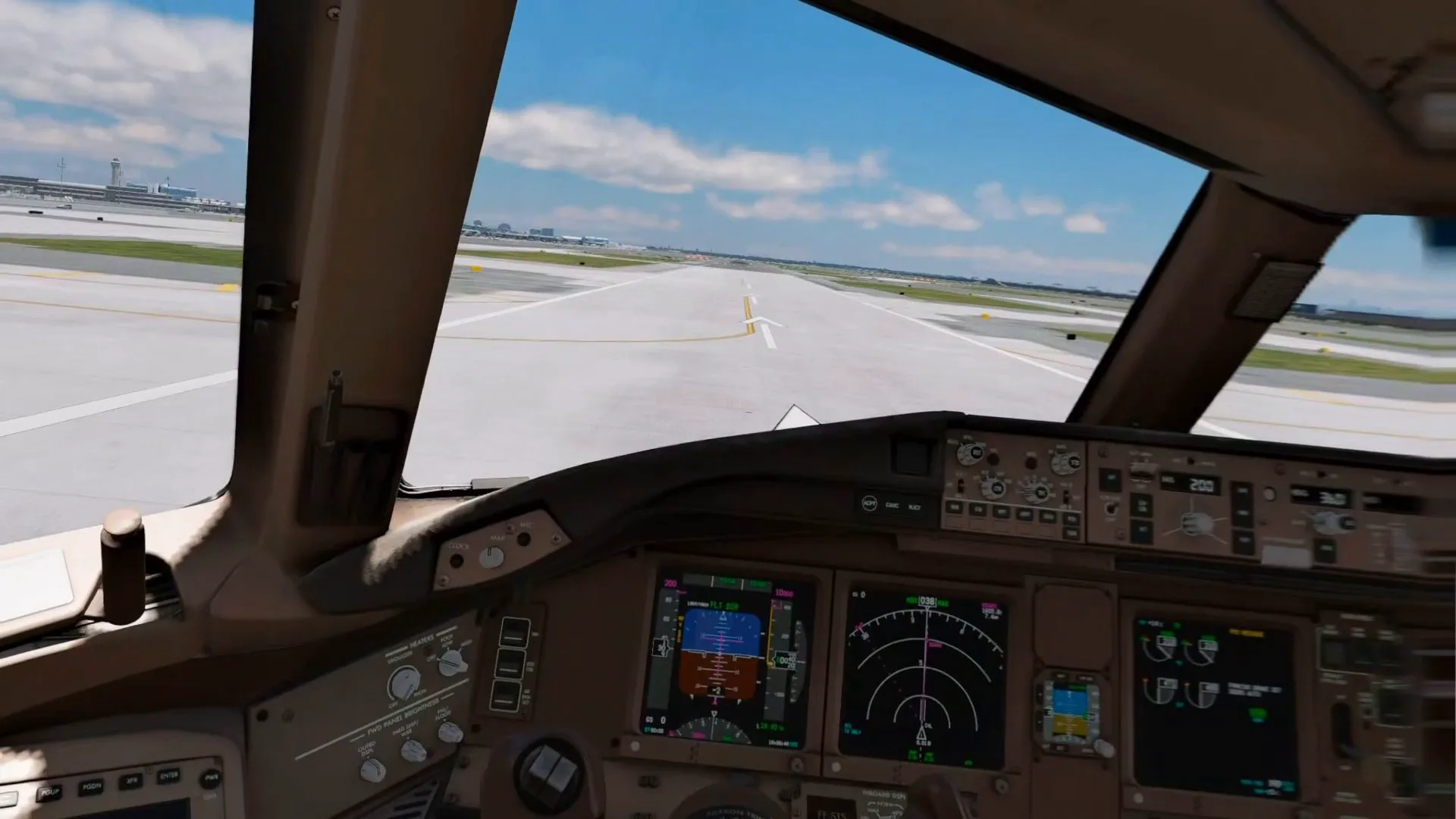
The view from an airliner flight deck, shown to a guest at the Aviator.NYC studio
The same flight, seen from the pilot's point of view.
Passenger perception and pilot reality
Passenger ThinksPilot Knows
The engines got quiet. Are we losing power?That's normal; we reduced thrust after climb-out to save fuel and reduce noise.
We're dropping! The plane is falling!That's turbulence, uncomfortable but normal. The plane is designed for far worse.
Why is the flight delayed? Is something wrong?Delays are safety decisions: weather routing, ATC flow, or maintenance checks. We never rush safety.
What's that loud thump?Landing gear retracting. It happens every flight, right on schedule.
Why are we circling?ATC is spacing aircraft for landing. It's like traffic lights in the sky, completely routine.

Fear of Flying FAQs

What to expect, who teaches it, and how the simulator helps.

Fear of Flying FAQs

What to expect, who teaches it, and how the simulator helps.

Aviator NYC's fear of flying program uses a flight instructor and an FAA-certified simulator to demystify every sound, sensation, and procedure that causes anxiety.

  • You sit in the pilot seat — seeing the cockpit from the pilot's perspective changes the experience
  • Your instructor explains turbulence, engine sounds, and approach procedures as they happen
  • You control the aircraft, so you learn by doing it rather than by being told about it
  • Sessions are private and confidential — no groups, no judgment

Aviator NYC's fear of flying instructors include active airline pilots and airline pilot-mentored CFIs.

  • Your instructor can explain what happens during a real flight
  • Our airline pilot-led program explains turbulence, weather, and mechanical situations
  • Their calm, factual explanations replace fear-based assumptions with real knowledge

Aviator NYC's simulator is a ground-based device in a Manhattan office — you can stop at any time, open the door, and step out.

  • No actual flying — the simulator stays on the ground at all times
  • You control the pace — your instructor adjusts to your comfort level
  • Many participants feel noticeably more comfortable within a single session

Aviator NYC encourages you to bring a partner, friend, or family member — having support makes the experience more comfortable.

  • Your companion can sit in the simulator room and observe the entire session
  • Some couples or families book together to address shared travel anxiety
  • Gift certificates are available if someone wants to gift this experience

Yes. The passenger view in the VR headset is the first hour of the two-hour fear of flying session at our Midtown Manhattan studio. A flight instructor flies beside you and narrates every sound and movement.

  • The first hour is in the headset with nothing to operate; the second is hands-on in the G1000 simulator
  • Your pilot explains what pilots watch during turbulence and what they tell the cabin crew. You can stop at any point
  • One two-hour visit with a flight instructor costs $430, the same with or without the VR hour
  • Bring one support person to sit with you at no charge
  • Aviation education from flight instructors, not therapy

Let's Find What Helps You Most

Answer a few questions to find topics that address your concerns.

Question 1 of 3

What concerns you most about flying?

Select the one that resonates most with your experience

Browse all the topics we can discuss

What Turbulence Really Means

Modern airliners are tested for turbulence far beyond what passengers feel. Wings can flex several feet. We'll show you the engineering videos.

Turbulence is a comfort issue, not a safety issue. Airplanes are built for it.

How Pilots Prepare Before Every Flight

Walk through our preflight planning: weather checks, fuel calculations, alternate airports, routing decisions. Nothing is left to memory or chance.

Dozens of professionals review every flight before it departs: dispatchers, mechanics, controllers, cabin crew, pilots.

Who's Watching the Sky

Learn about air traffic control separation, how aircraft are spaced and tracked continuously, and the multiple layers of monitoring.

Every flight is monitored from takeoff to landing by ATC, dispatch, and operations.

Why Airplanes Sound and Feel the Way They Do

Decode common triggers: flap/slat noises, engine power changes after takeoff, gear retraction thump, autopilot disconnect chime.

Every sound has a reason. We'll explain what's normal vs. what's truly abnormal (and how rarely that occurs).

How Pilots Handle Abnormal Situations

Pilots train for emergencies every six months in simulators more complex than the real flight deck. Calm procedures replace emotion.

There's no panic, just process. Every major system has backups.

Weather and Decision-Making

How weather data is monitored: radar, satellite, pilot reports, dispatch coordination. Flights divert or delay when it's safest.

Lightning strikes don't bring planes down. Modern aircraft have protection systems that work.

Takeoff and Landing Perception

Why takeoff feels powerful and noisy but is the safest, most controlled part of flight. What pilots monitor: engine parameters, runway length, climb gradient.

Crosswinds, braking systems, and go-arounds are standard procedures we practice constantly.

Why Pilots Sound Calm

Calm communication is part of training; it's not denial, it's discipline. Crew coordination divides tasks and balances workload.

Pilot composure is a trained behavior that supports better decision-making.

Maintenance and Inspections

Daily preflight walkarounds by pilots themselves, scheduled maintenance cycles, and inspection standards stricter than cars or ships.

Aircraft are maintained to incredibly strict standards. Nothing flies broken.

Why Flying Is Statistically Safe

Every pilot flying your route has done it hundreds of times. Most events that make the news are training-level situations for us.

Risk is engineered out through layers of protection, training, and design.

What Happens in the Flight Deck During a Flight

What pilots do at each phase: climb, cruise, descent. Even at cruise, continuous monitoring and communication are happening.

Autopilot increases safety, doesn't remove control. Automation management is a core pilot skill.

Why Delays Are Safety Decisions

Demystify delays: ATC flow restrictions, maintenance verification, weather routing. Pilots can't and won't "push it."

Every delay is a controlled safety call. Delay = safe system working.
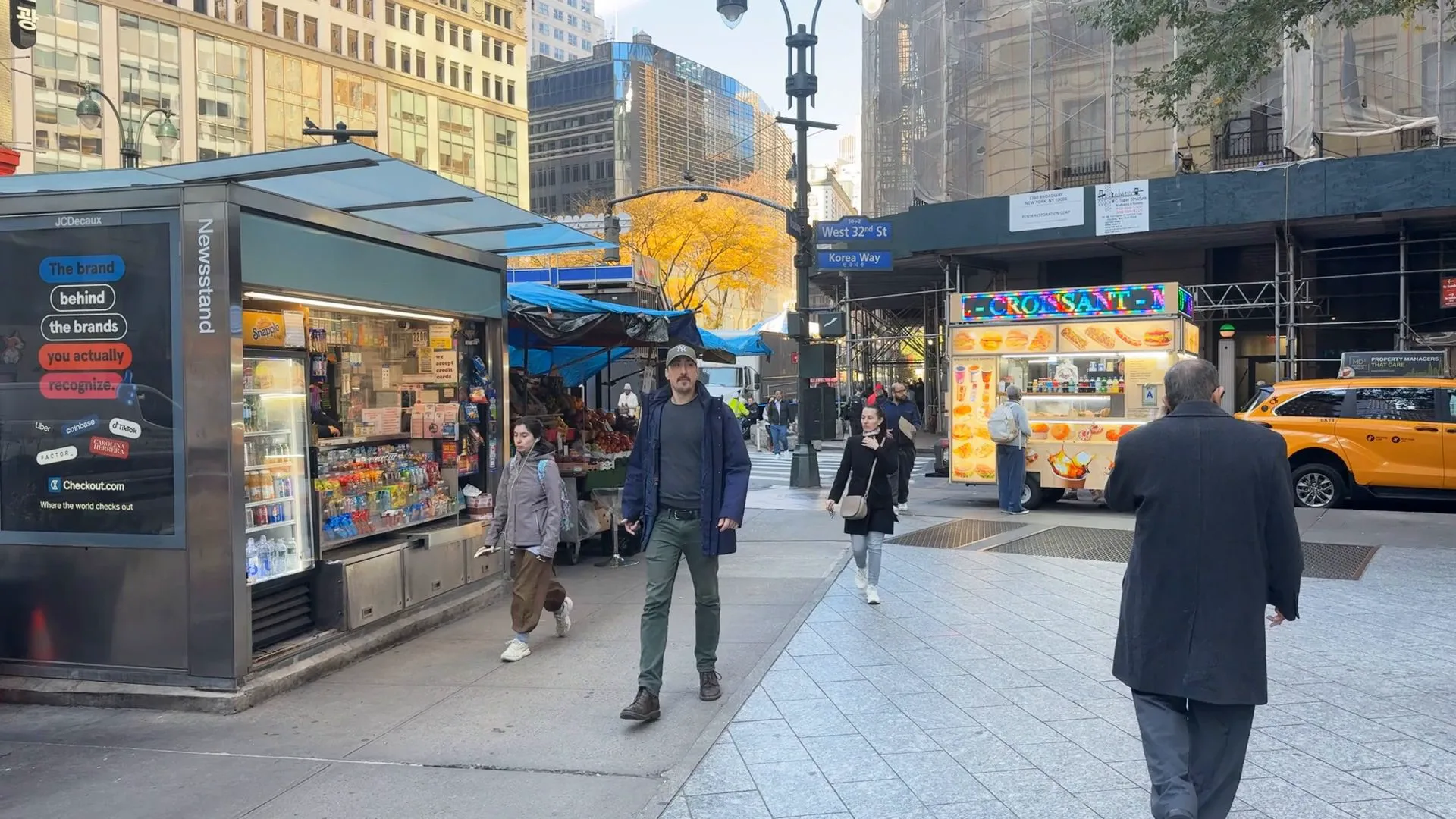
Manhattan Location

No Airport Required

Learn in Manhattan, not at an airport. No triggering airport environment, no weather delays, no parking hassles. Just a professional simulator facility where you can focus on learning.

  • Midtown Manhattan (by appointment only)
  • Accessible by major subway lines
  • The G1000 simulator is an FAA-approved Advanced Aviation Training Device (AATD).
  • Comfortable, private learning environment

More fear of flying resources: calm.flights (EN) · vuelosinmiedo.com (ES)

Ready to Take the First Step?

Get a pilot's answer to what worries you about flying.

This helps us provide better guidance
The more detail you provide, the better we can help. (min 20 characters)
Optional. If an AI assistant or a search recommended us, we would love to know.

We record interactions to improve our service. Privacy Policy

Last updated: November 2026