What Is a Fear of Flying Simulator Session Like?
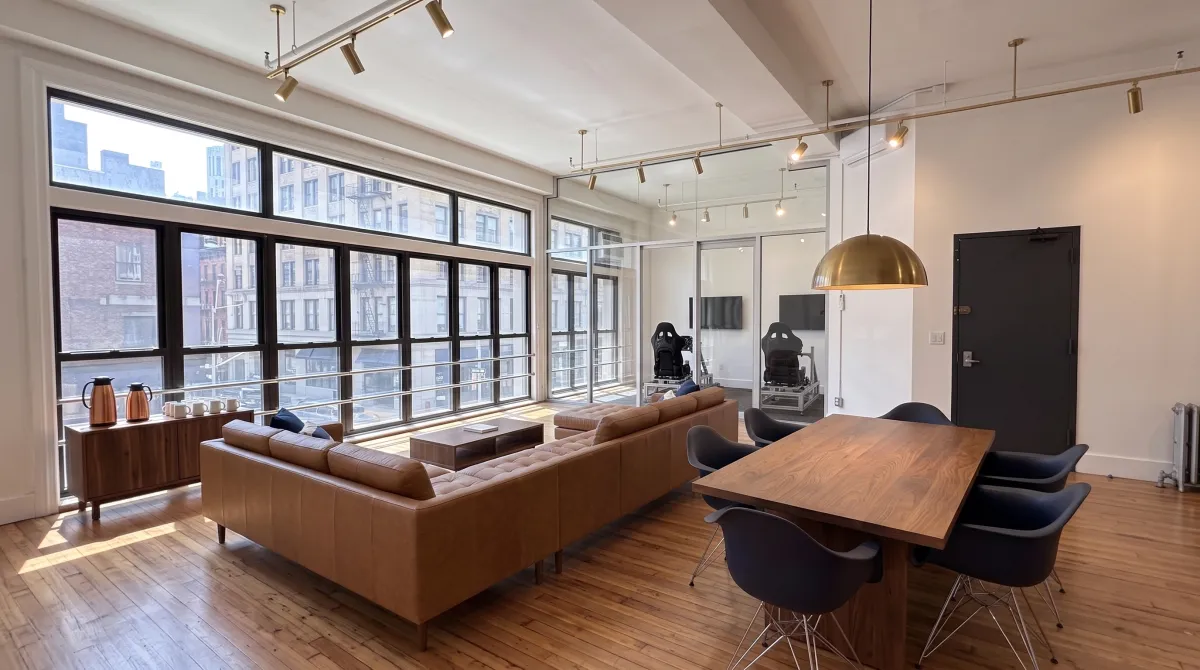
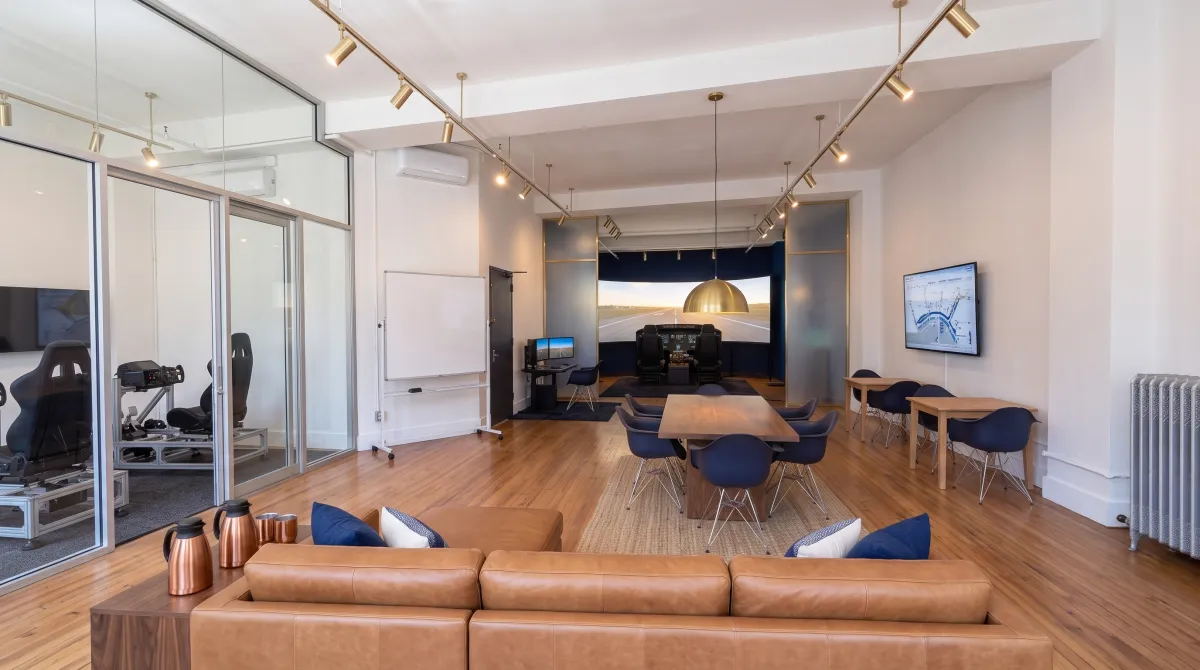
Book two hours with an airline pilot at our Midtown Manhattan studio. Every session opens with a briefing, then you fly. Today, both hours are in the G1000 simulator. Once the VR room opens, the first hour moves into the VR headset: you ride as a passenger while the pilot flies beside you and explains every sound and movement. The second hour stays hands-on in the simulator. You set the turbulence level and can stop at any point.

Studio and flight images are AI-generated previews of the planned space and experiences.
What Is a Fear of Flying Simulator Session?
It is one two-hour session with an airline pilot at our Midtown Manhattan studio, booked as one visit. It opens with a briefing: your pilot goes through what worries you and how the simulator works before you fly. How long that takes is up to you. If you have already done a Zoom session your questions are largely answered, and if you have not, your pilot takes the time they need. Then you fly. Today, both hours are in the G1000 simulator. Once the VR room opens, the first hour moves into the VR headset for the passenger view, and the second hour stays hands-on in the G1000 simulator. During the VR hour, your pilot flies from beside you and narrates the trip from the gate through taxi, takeoff, cruise, approach, and landing. You hear each engine, gear, and flap sound as the pilot explains what the airplane is doing. There is nothing for you to operate in the headset. Your pilot walks you through seven turbulence levels at the pace you set, and you can pause or stop at any point.
- Two hours with an airline pilot, booked as one visit
- A briefing first, as long as your questions need, then you fly
- Both hours in the G1000 simulator today
- Once the VR room opens, a passenger hour in the headset followed by a hands-on G1000 hour
- Engine, gear, and flap sounds timed to what the airplane is doing
- Nothing to operate in the VR hour; pause or stop at any point
- Bring one support person to sit with you at no charge
Aviation education from working airline pilots. This is not therapy or medical treatment.
What Do the Seven Turbulence Levels Feel Like?
Turbulence is the single most common trigger for nervous flyers, so the session builds it in steps instead of all at once. Each level is a specific, repeatable amount of aircraft movement, generated by real flight-simulation physics rather than random shaking, so what you feel matches what the simulated airplane is actually doing. Your pilot starts wherever you are comfortable and moves up or down based on how the session is going. The goal is not to see how much you can take. It is to learn where routine ends and where a pilot would actually be concerned, which for most passengers is much further apart than it feels from seat 24A.
Level 0Smooth cruise
Level flight with no movement at all. This is what most of a typical flight actually feels like, and it is where every session starts.
Level 1Occasional light bumps
A single soft bump every so often, the kind that would not interrupt a conversation or spill a drink.
Level 2Continuous light chop
A steady, small vibration, similar to a car on a slightly rough road. Cabin service normally continues through this.
Level 3Light turbulence
Noticeable rhythmic movement with small changes in altitude. The seatbelt sign often comes on here, and pilots treat it as routine.
Level 4Moderate turbulence
Firmer bumps you feel against the seatbelt, with the wings visibly flexing outside the window. This is where most anxious flyers assume something is wrong, and it is still well inside what the airplane is built for.
Level 5Moderate with stronger events
Sustained moderate movement with occasional sharper jolts. Flight attendants would be seated. Your pilot explains what the crew is doing and why the flight continues normally.
Level 6Short challenging scenario
A deliberately demanding stretch, kept brief and entirely optional. Most guests never ask for it, and no session starts here.
Uncomfortable is not the same as unsafe. Your pilot narrates what is happening, why power settings change, and why the wings are supposed to flex.
Which Seat Is Right for Your Fear?
Two different fears need two different seats. If what unsettles you is the passenger experience, being strapped in with no control, not knowing what a sound means, feeling the airplane move without being able to see out, then the passenger seat is the one to practice in. If instead your fear is really about control, and you calm down by understanding exactly how the machine works, the pilot seat is the better tool: you fly the airplane yourself in our G1000 simulator with an airline pilot next to you. Today, both hours of the session are in the pilot seat, after the briefing that opens every session; once the VR room opens, the VR hour joins the same two-hour session. Many people do both: the passenger view in the headset and hands-on time in the simulator.
- Passenger seat: turbulence, cabin sounds, no visibility, no control
- Pilot seat: you fly it yourself and see how every input works
- Both hours are in the pilot seat today; the VR hour joins once the VR room opens
- Many people do both, with the passenger view and pilot seat in one session
Does Practicing Flight Sensations on the Ground Help?
Researchers have studied gradual, controlled practice with flight sensations in virtual reality since the 1990s, and published reviews of that work report encouraging results, including studies that reproduced takeoff, landing and turbulence in a simulator. Our session applies the same underlying idea, familiarity built in small steps, as aviation education rather than as clinical care. What we offer is an airline pilot who can show you exactly what an airplane is doing and why, in a place where nothing is at stake and you control the pace. We do not diagnose anything, we do not provide therapy, and we make no promises about how any individual will feel afterward.
- We are aviation educators, not clinicians, and we say so plainly
- If your fear involves panic attacks, claustrophobia, or a past traumatic event, work with a licensed therapist; we are glad to work alongside one
- Nothing here is a substitute for medical or psychological care
What Does a Fear of Flying Simulator Session Cost?
One two-hour session, one price, always with an airline pilot. It opens with a briefing, for as long as your questions need, and then you fly. Both hours are in the G1000 simulator today. Once the VR room opens, the first hour moves into the headset and the second stays hands-on in the simulator. The price is the same whichever hour is in the headset. There is no operator-only rate, and one support person can sit with you at no charge.
Fear of Flying Simulator Session
2 hours
$430per session
- A briefing first, then hands-on time in the G1000 simulator
- Once the VR room opens, your pilot flies and narrates the VR hour
- Turbulence Levels 0 through 6, at your pace
- Gate to gate with an airline pilot explaining each phase
- Bring one support person to sit with you at no charge
Instructor led only, with no operator-only rate. This is aviation education, not therapy.
Fear of Flying Simulator FAQs
What the session is, how the turbulence levels work, and how to book.
Fear of Flying Simulator FAQ
What the session is, how the turbulence levels work, and how to book.
You spend two hours with an airline pilot at our Midtown Manhattan studio, booked as one visit. It opens with a briefing, where your pilot goes through what worries you and how the simulator works, and then you fly. Today, both hours are in the G1000 simulator. Once the VR room opens, the first hour moves into the VR headset as a passenger and the second stays hands-on in the simulator.
- The briefing takes as long as your questions need; if you have already done a Zoom session, most of them are answered
- During the VR hour, your pilot flies beside you and narrates every sound and movement, gate to gate
- Bring one support person to sit with you at no charge
- There is nothing for you to operate in the VR hour
- You can pause or stop at any moment
- The session is not FAA approved, so the time never counts toward any certificate, rating, or currency
No. This is aviation education delivered by working airline pilots, not therapy, and we make no claims about how any individual will feel afterward.
- We do not diagnose anything and we are not clinicians
- If your fear involves panic attacks, claustrophobia, or a past traumatic event, work with a licensed therapist
- We are glad to work alongside a therapist you already see
Turbulence runs on a seven-step ladder from Level 0, smooth cruise, to Level 6, a short and entirely optional challenging scenario. Your pilot starts where you are comfortable and moves up or down based on how the session is going.
- Movement comes from real flight-simulation physics, not random shaking
- Level 3 is light turbulence, the kind pilots treat as completely routine
- Level 4 is moderate, where the wings visibly flex and the airplane is still well inside its limits
- Most guests never ask for Level 6, and no session starts there
The two-hour fear of flying session costs $430, always with an airline pilot. Both hours are booked as one visit.
- Sessions are instructor led only, with no operator-only rate
- The price is the same whether both hours are in the G1000 simulator or the first hour is in the VR headset
- One support person can sit with you at no charge
The VR hour joins the two-hour session once the VR room opens. Pilot-seat sessions with an airline pilot are bookable today at our Midtown Manhattan studio.
- Until then, both hours are in the G1000 simulator, after the briefing that opens every session
- Once the VR room opens, the first hour moves into the headset and the second stays in the simulator
- Use the questions form to tell your pilot what worries you before you book
Both are part of one two-hour session once the VR room opens, and many people do both. The passenger view is for practicing the parts of a trip you cannot control. The pilot seat lets you fly the simulator yourself and see how it works.
- The VR hour covers the passenger view, cabin sounds, and turbulence at your pace
- The second hour is hands-on in the G1000 simulator with an airline pilot beside you
- Today, both hours are in the pilot seat, and for many people that is the better fit
Tell Us What Worries You Most
Your answers go to the airline pilot who runs your session, so the two hours start where you are. Tell us what worries you most and what you would like to ask before you book.
Bookable now: two hours with an airline pilot at our Midtown Manhattan studio, opening with a briefing and one support person welcome at no charge. Today, both hours are in the G1000 simulator; once the VR room opens, the first hour moves into the headset and the second stays hands-on in the simulator. These sessions are aviation education and recreation, not therapy or medical treatment. They are not FAA approved, so simulator time never counts toward any certificate, rating, or currency.