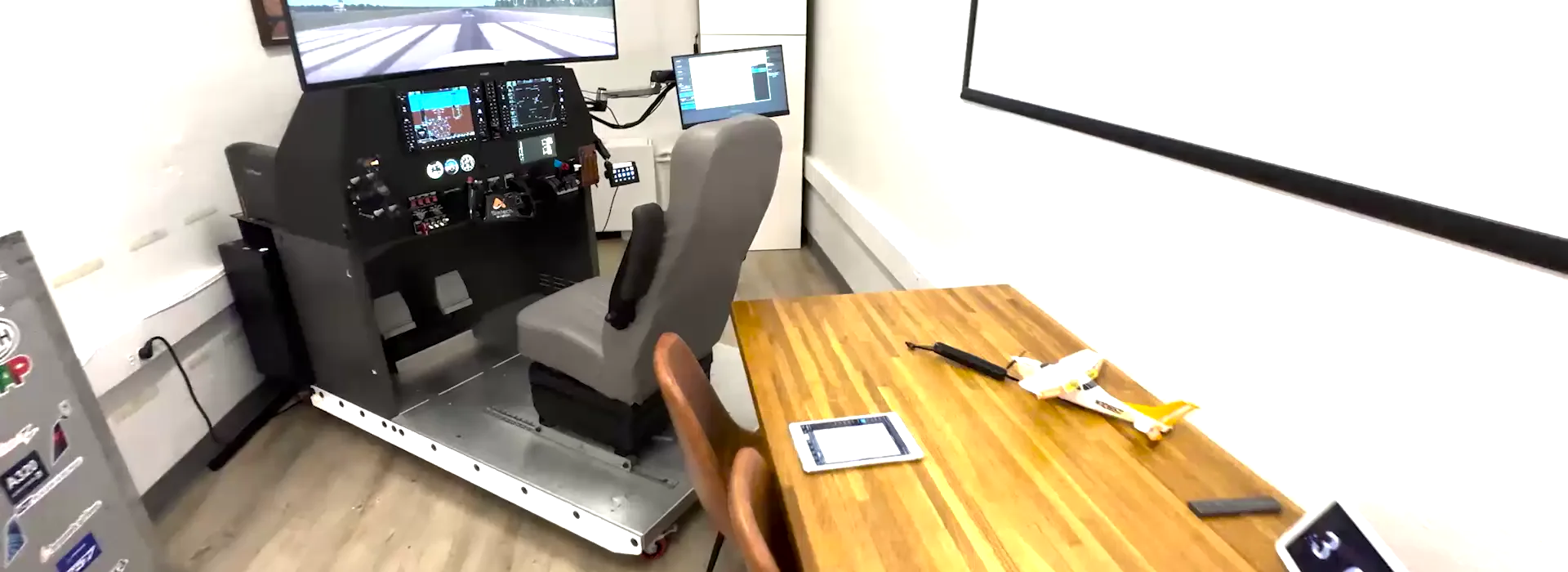
Consistency is the single most important factor in private pilot training. Flying only once a week can slow your progress, but there are proven ways to keep moving forward efficiently—especially if you add simulator sessions and structured ground school.
This guide breaks down why flight lesson frequency matters, the challenges of flying once a week, and how to make it work without doubling your training time or cost.
Why Flight Training Frequency Matters
Like any skill, learning to fly depends on repetition. The ideal pace for private pilot license (PPL) training is 2–3 flight lessons per week. At this frequency, skills stay fresh, and you build toward milestones like your solo flight and checkride faster.
When lessons are too far apart, you often spend the first 15–20 minutes of each flight reviewing old maneuvers before learning something new. Over time, that adds extra flight training hours—and higher costs.
What Happens If You Fly Once a Week?
Flying once a week is possible, but here's what to expect:
- Slower Progression: Skills fade between lessons, and you may feel like you're taking "two steps forward, one step back."
- More Total Flight Hours: While the FAA minimum for a PPL is 40 hours, most pilots finish in 60–80 hours. Infrequent training usually puts you at the higher end of that range, raising flight training costs.
- Greater Time Commitment: In cities like New York, commuting to airports in New Jersey or Long Island can take 1–2 hours each way. For many, that makes scheduling more than one flight lesson per week unrealistic.
How to Make One Flight Lesson Per Week Work
The key to succeeding with a limited schedule is supplementing your flight time. With the right strategy, you can still finish in a reasonable timeframe and keep costs under control.
Step 1: Add Simulator Sessions
A flight simulator is the most efficient way to reinforce your skills. Our simulator training allows students to:
- Practice procedures and maneuvers between lessons
- Stay sharp without paying aircraft rental rates ($250–300/hour)
- Prepare for the next flight so cockpit time is spent learning, not reviewing
Step 2: Commit to Ground School
Your flight time should be focused on flying. Use ground school to cover:
- Weather theory
- Airspace and regulations
- Aircraft systems
- Flight planning and decision-making
This keeps your in-air hours dedicated to building stick-and-rudder skills.
Step 3: Stay Engaged Between Lessons
Even small habits help:
- Chair-fly procedures at home
- Review training notes and textbooks
- Watch aviation videos or listen to podcasts
The more you keep aviation in your weekly routine, the faster you'll progress.
Flight Training Frequency Comparison
| Training Approach | Time to Completion | Approx. Hours | Key Benefit |
|---|---|---|---|
| 2–3 Lessons per Week | 3–6 months | 45–55 hours | Fastest progress |
| 1 Lesson/Week + Sim Support | 6–9 months | 50–65 hours | Cost-effective & efficient |
| 1 Lesson/Week (No supplements) | 12–24 months | 60–80 hours | Fits a busy schedule |
Private Pilot Training Tips
Frequently Asked Questions
Make Every Lesson Count
So, is one flight lesson per week enough to get your license? Yes—but you'll need patience, consistency, and a strategy to keep costs under control.
At Aviator.NYC, our instructors—professional airline pilots from major U.S. carriers—combine in-air lessons with ground training and advanced simulators. This blended approach helps busy students in New York maximize their schedule and still achieve their Private Pilot License efficiently.
Your journey may take longer if you fly once a week, but with the right support, every lesson can move you closer to your goal.